202 Cooper
Chandler, Arizona
Huntsville, AL
Robins and Morton
Structis
Chapman Sisson Architects
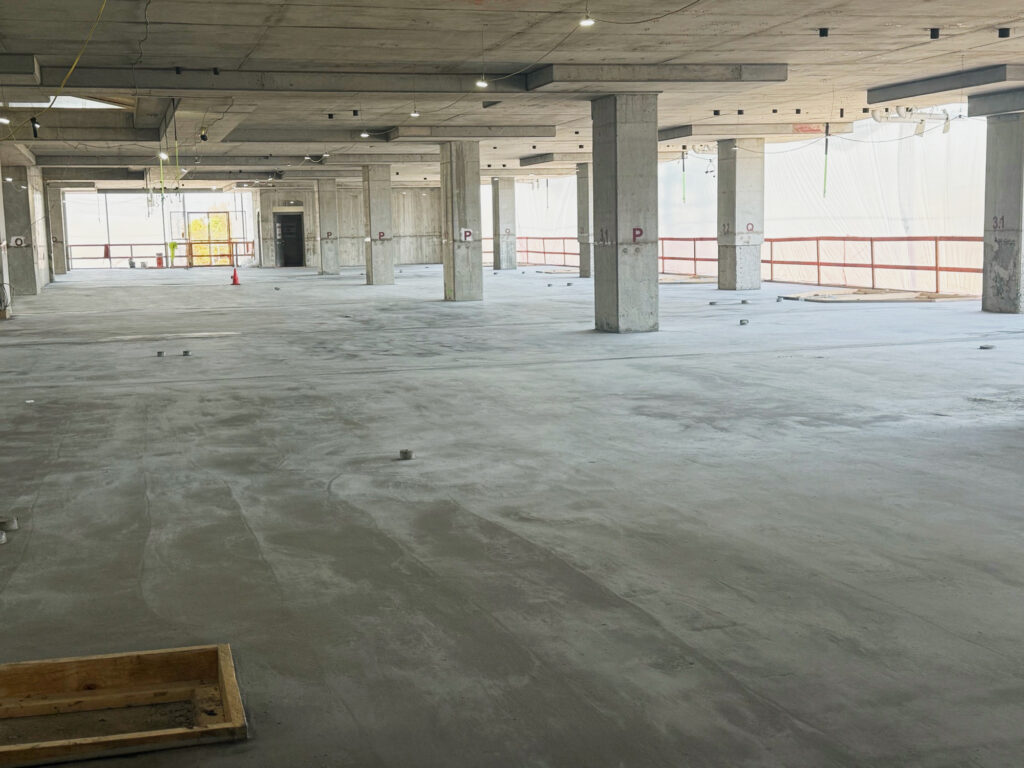
The Madison Street Tower Expansion involved a significant adaptive reuse project: adding five new stories of patient care space (120 beds, cardiothoracic, and neuro ICUs) atop an existing four-story hospital parking garage. The most critical challenge was transforming the existing 4th-floor parking deck—which was intentionally sloped dramatically for drainage—into a perfectly level subfloor to match the adjacent hospital’s 4th-floor elevation and meet the tight flatness tolerances required for advanced patient care facilities.
The slopes were ranging from low spots requiring fill depths of up to 5 inches to high spots that needed grinding up to 1 ¾ inches. The General Contractor, Robins & Morton, faced the dilemma of either demolishing and repouring the entire 19,000 sq. ft. parking deck, or finding a lightweight, rapid, and structurally viable alternative.
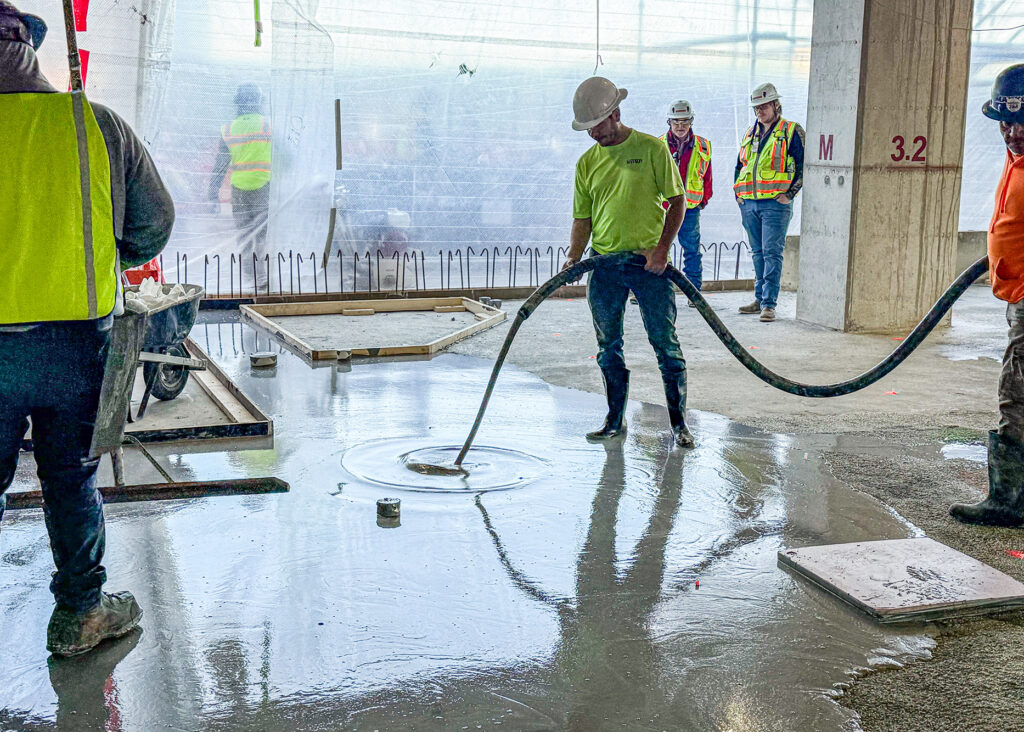
Maxxon's comprehensive leveling system was selected as the only viable alternative to the costly and disruptive method of removing and replacing the existing concrete deck.
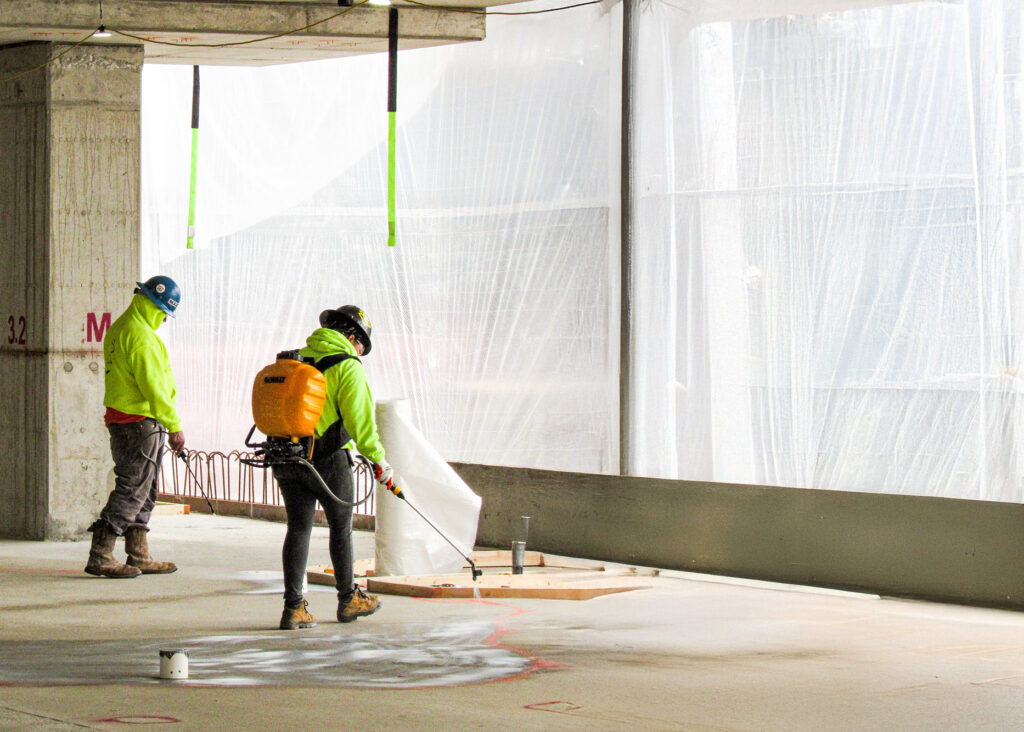
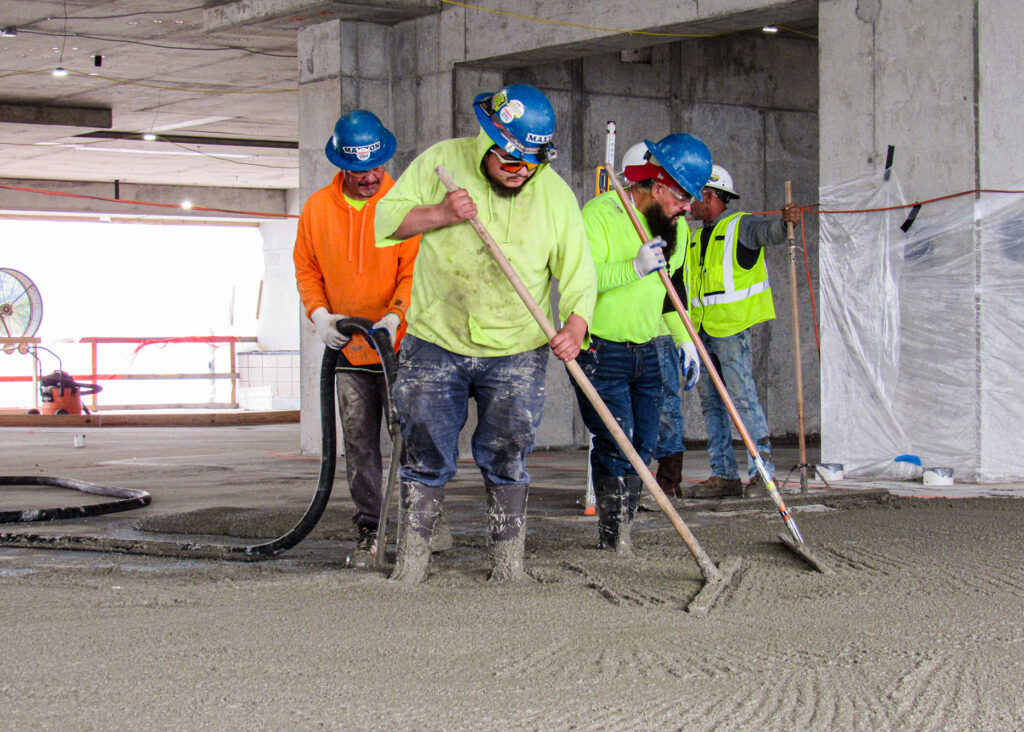
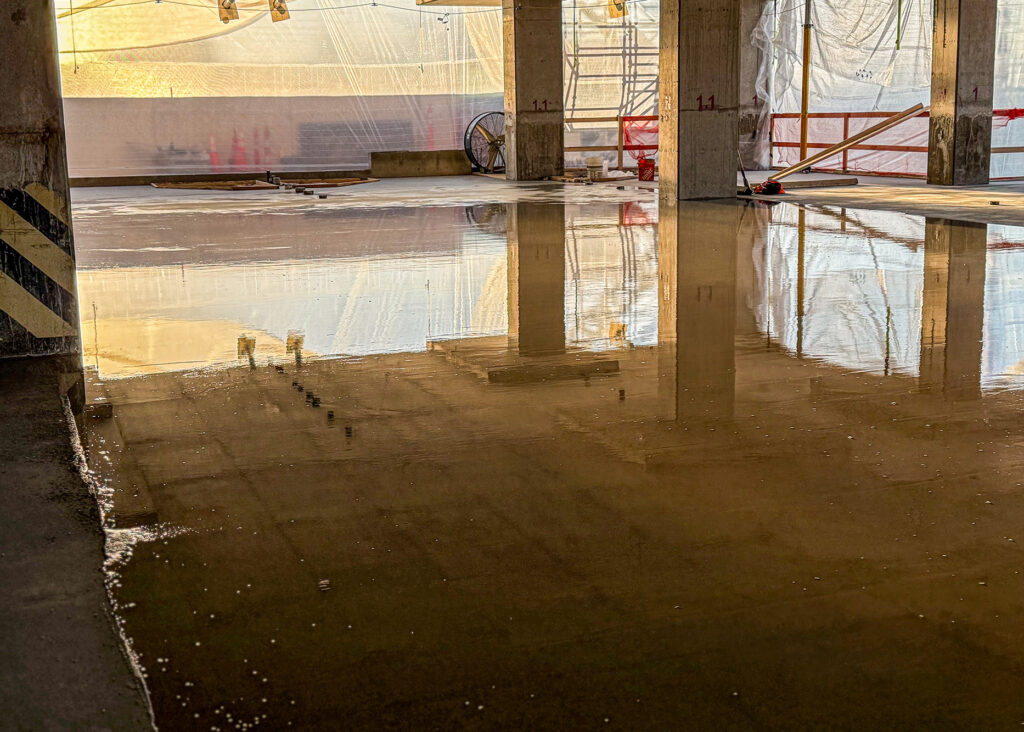
The process involved a two-stage application:
By utilizing the Maxxon large & deep solution, the General Contractor avoided significant structural work, temporary bracing, and extensive project delays, leading to estimated cost savings of $2 to $3 million compared to traditional deck removal and replacement.
The primary obstacle involved logistical constraints due to the hospital's continuous operation. The material staging and pump location, the only area large enough to accommodate the necessary sand and equipment, was directly adjacent to the critical service garage entrance for hospital supply delivery trucks. This required meticulous scheduling and coordination with site management to ensure the service entrance remained fully operational 24/7, maintaining seamless hospital logistics while pouring was underway.
The initial scope on the 4th floor was completed successfully and ahead of schedule, validating the lightweight leveling approach. The project demonstrated the system’s effectiveness in complex adaptive reuse, providing a high-performance, cost-efficient solution critical for maintaining the project timeline and budget. The project allowed the hospital’s continuous operation of critical services without disruption.