Driven by code requirements and occupant expectations, sound attenuation in multifamily properties is an increasingly important factor in building design and construction.
As the demand for sound control expands, new players have entered the market seeking to capitalize on greater opportunities, especially with topical sound mats.
While topical sound mats do serve a purpose, a more effective and proven acoustic isolation solution for wood-frame multifamily construction is an encapsulated sound control system. Encapsulated systems deliver significant advantages over topical sound mats, including superior sound control at both high- and low-frequencies, compatibility with all popular floor coverings, and consistent acoustical performance regardless of flooring updates or repairs. In addition, by encapsulating the sound mat in a gypsum underlayment, the sound control system becomes a permanent part of the building envelope that’s impervious to damage and never needs replacing.
Before specifying a topical sound mat for a wood-frame, multifamily project, consider the following:
What are the sound control expectations of occupants and owners?
Topical sound mats are less effective in mitigating low-frequency, impact-related sounds. This is especially true for popular hard-surface flooring such as LVT and LVP on typical wood frame construction where performance is constrained to slightly above International Building Code's (IBC) code minimum IIC rating. While topical mats may muffle the clicks of high heels, low-frequency impact noises, such as footfalls and dropped objects, can bleed through surface-applied sound mats. Since impact-related sounds are a common source of tenant complaints and turnovers, specifying a sound control solution proven to mitigate impact noise at the desired IIC rating can protect a project’s reputation and profitability by meeting occupant expectations.
What are the repair and renovation expectations of owners?
Because topical sound mats are glued or floated between a gypsum underlayment and finished flooring, they must be fully removed and replaced before updated finished flooring can be installed. This drives up the flooring renovation cost and timeline. In addition, any finished flooring changes negate the ability to predict future acoustical performance. Topical sound mats do not easily accommodate minor repairs. One section of worn or damaged flooring cannot simply be exchanged with a new flooring section. A new topical sound mat must be placed underneath the repair area. Attempting to retrofit one section of topical sound mat poses challenges to installation and sound control performance.
What are the flooring manufacturer’s requirements?
When specifying a sound control system, it is critical to follow the flooring manufacturer’s requirements to uphold the floor goods warranty. Deflection of topical sound mats may cause flooring failures, while some mats may cause discoloration and delamination of LVT and LVP flooring due to plasticizer migration. Plasticizer is a chemical combination added to certain topical sound mats during the manufacturing phase to make them more flexible. Over time the plasticizer can break down, migrate out, and negatively impact flooring performance.
How important is durability?
Topical sound mats are susceptible to compression and damage, both prior to flooring installation and from occupant disregard. Impossible to see under a finished floor, damaged topical sound mats are prone to flanking paths which hinder sound control performance and compromise code compliance.
Despite limitations, topical sound mats can be suited for the following applications:
Concrete Multifamily Construction
In concrete multifamily construction, the concrete satisfies fire code criteria so the fire-resistant gypsum underlayment is not needed from a fire code perspective. Compliance with acoustical codes in concrete multifamily properties, may be achievable with topical sound mats that meet the flooring manufacturer’s requirements and ceilings. In cases where ceilings are not desired, the higher isolation performance of an encapsulated mat under gypsum concrete may be needed.
Older Wood Frame Multifamily Renovations
Multifamily properties erected prior to 1996 did not incorporate sound control as code requirements were not widely recognized until 1997. Now, when these older multifamily buildings undergo renovations, they must be updated to comply with sound code. In these cases, a topical sound mat can help achieve code compliance when an encapsulated system is not feasible.
Combined with an Encapsulated System
In renovation projects where an encapsulated sound control system exists, a topical sound mat can be combined with the encapsulated system to elevate high-frequency sound control. This is especially useful in projects where developers are transforming market-rate buildings into luxury properties.

Maxxon: Delivering Over Three Decades of Encapsulated Expertise
As a leader in sound attenuation for buildings and the largest U.S. manufacturer of entangled mesh sound control products, Maxxon is a trusted expert in sound control solutions.
For multifamily construction, Maxxon’s encapsulated, Acoustic Isolation System provides proven, rated, and tested assemblies that meet or exceed code requirements for fire-safety and sound control while also accommodating floor goods manufacturers’ specifications.
includes Maxxon® Acousti-Mat® Sound Mat under Maxxon® Gyp-Crete® Gypsum Underlayment sealed with Maxxon® Acousti-Mat® Perimeter Isolation Strips. This comprehensive system protects the integrity of the entangled mesh sound mat by maintaining the air gap to dissipate low-frequency, acoustical energy. The solid mass of the gypsum underlayment blocks airborne sound transfer and provides a strong, smooth, flat surface for finished flooring, while the isolation strips optimize noise reduction and eliminate sound bleed of flanking paths.
Backed by 30+ years of field- and lab-tested performance, including more than 200 published sound tests and over 140 UL and ULC fire-resistance rated designs, Maxxon’s encapsulated Acoustic Isolation System delivers a proven, trusted, and permanent solution for optimal wood-frame multifamily sound control.
In comparison, topical sound mats merely scratch the surface of IIC code compliance and functionality.
For a detailed analysis of topical sound mats, access this technical bulletin.
Heard some buzz about board-style underlayments? Get the facts before getting stung.
There is reason for cautious optimism in the commercial flooring industry as the second half of 2025 gets underway.
Overall, commercial construction spending is expected to increase slightly, driven predominately by investments in data centers, healthcare facilities, and manufacturing — including semiconductor chip fabrication facilities.[1] In addition, the changing labor market will likely give companies more bargaining strength in return-to-work efforts, which could alter current office construction and renovation forecasts.
Even amid the unknown impacts of tariffs, building industry professionals can expect the following trends to influence commercial renovations and new construction projects.
Show-Stoppers: Bold, Signature Flooring
In the commercial space, flooring is moving beyond mere function. No longer an afterthought, designers are using flooring to convey distinct brand identities and emphasize the upscale nature of an environment. Flooring professionals are being asked to create geometric looks such as chevron, herringbone, and basketweave patterns that place elegance and grandeur underfoot.
In creative offices and businesses, bold, patterned carpets capture the dynamic essence of employees and customers, reinforcing the vibrant energy of the company from the ground up. Digital printing on commercial flooring materials is also a top trend. The technology offers unlimited potential for one-of-a-kind flooring solutions — from company logos and detailed patterns to custom icons and messages. In the buildings of trailblazing organizations, flooring is no longer boring. It’s a blank canvas for leaving a bold, memorable mark.

Enduring Desires: Durability and Sustainability
Advancements in luxury vinyl flooring, hybrid flooring, and laminates provide property owners and designers with an expansive selection of flooring materials that are both long-lasting and beautiful. With the ability to specify flooring that resists water damage, heavy foot traffic, sun fading, and scratches, today’s commercial spaces no longer need to prioritize low-maintenance durability over high-end aesthetic appeal. It’s feasible to have both.
New surface technologies are also enhancing flooring performance. Treatments to make floors more resistant to stains, moisture, and bacteria are a welcome addition in restaurants and healthcare facilities — environments where hygiene is mission critical.
To support projects seeking LEED certification, manufacturers are expanding product portfolios with offerings made from naturally renewable resources, such as cork and rubber, along with those made from recycled materials, such as luxury vinyl tile and upcycled carpet fibers. The industry is also seeing more carbon-neutral flooring choices.
Despite a political shift away from climate policies, most organizations are maintaining their environmental commitments to protect the long-term resiliency of business operations. Sustainable flooring options allow developers, architects, builders, and installers to support these commitments by reducing construction waste, extending the flooring life-cycle of commercial projects, and meeting environmental regulations in key municipalities.
To ensure floor coverings deliver on the promises of durability and sustainability or match a designer’s beautiful, bold vision, professional substrate preparation is imperative. Even the most advanced product cannot overcome an uneven subfloor or moisture seeping up from a concrete slab. Incorrect or inadequate subfloor prep compromises the integrity of a floor covering — shortening its lifespan and negating why the material was selected in the first place.
As industry leaders in underlayment and floor prep technologies, Maxxon offers an extensive portfolio of innovative products for new builds and renovations. From self-leveling underlayments and strong-bonding floor patches to time-saving moisture mitigation and game-changing adhesive removal, Maxxon provides faster, easier ways to achieve superior subfloor preparation that protects the durability and sustainability of commercial flooring investments.
Natural Beauty: Biophilic Buildings
Biophilic design cultivates a connection to nature in the built environment. In commercial construction, the practice is being adopted for its many advantages, including the ability to reduce stress, improve mood, and enhance productivity.
Using natural elements such as wood, stone, and plants to bring the natural world indoors are common in biophilic designs. Natural textures of wood- and stone-like materials are also popular. Upscale buildings may incorporate impressive water features and living walls. One of the foundational aspects of biophilic design is increasing the amount of daylight in a building which boosts energy levels and fosters a greater sense of well-being.
The abundance of natural light magnifies the importance of expert flooring installations. As streams of sunlight pour into a space and reflect off a floor’s surface, any imperfection is literally brought to light. Subfloors must be impeccably smooth, flat, and level to eliminate any blemishes or ledging. Maxxon® Commercial Pro Level-Crete™, Maxxon® Commercial Pro Level-Right®, and Maxxon® Commercial Level-EZ™ are three proven solutions for achieving smooth-as-glass level floors — a non-negotiable for sun-drenched biophilic projects.
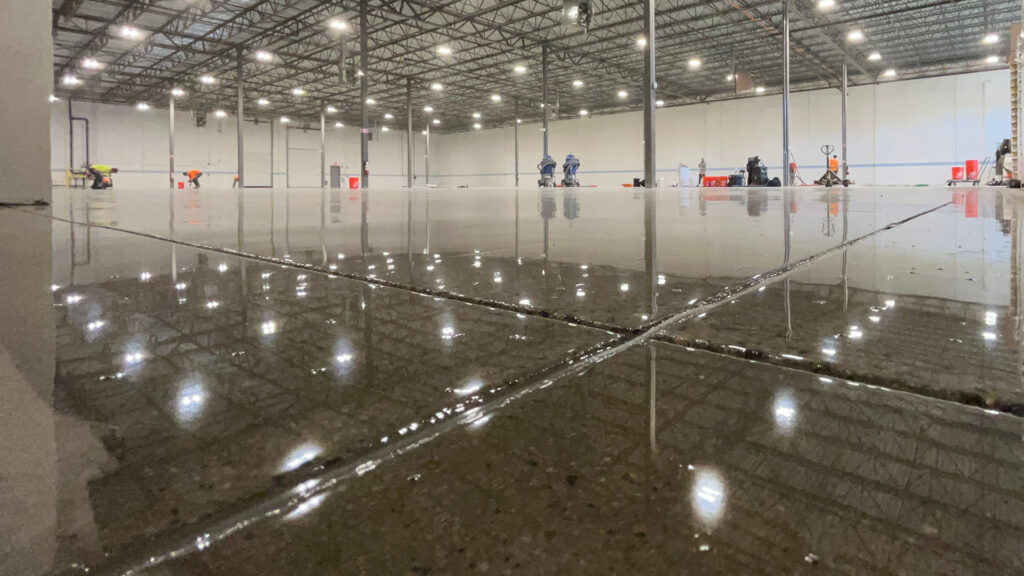
Another Maxxon solution that’s ideal for biophilic designs is Maxxon® Commercial Pro VersaTop™. This innovative hydraulic cement floor topping provides an exposed aggregate look with a streamlined installation process. It resembles decorative concrete but doesn’t require mechanical prep or polishing. VersaTop™ is a time- and labor-saving solution for bringing beautiful, stone-like floors to biophilic projects.
Needed Now More Than Ever: Acoustical Privacy
As the world gets louder and more distracting, the need for acoustical privacy becomes even more important. In work environments, sub-par sound control compromises efficiency and profitability. Distracting noise can cause a 66% drop in performance, according to a report by the World Green Building Council (WGBC).[2] For diners, a noisy restaurant is rated to be more irritating than poor service.[3] In healthcare settings, protecting patient confidentiality, especially during sensitive conversations, is a crucial element of respectful, high-quality care.
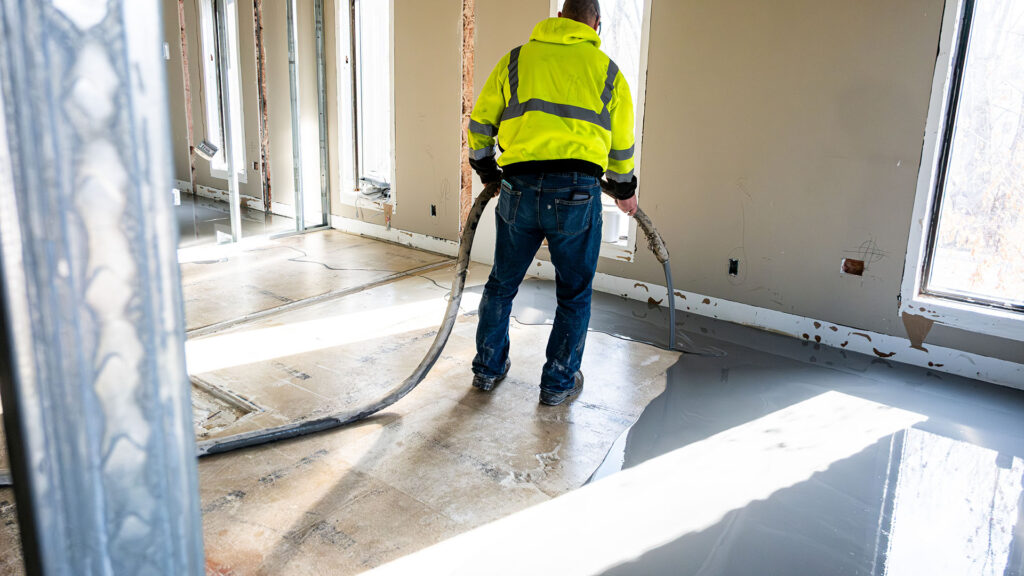
For commercial spaces in need of acoustical privacy without impacting floor height, Maxxon offers Acousti-Top®, a low-profile, high-performance sound mat that provides code-level sound control without bulk. For commercial spaces in need of elevated sound control requirements or those undergoing transformation in adaptive reuse projects, Maxxon offers proven acoustic isolation systems backed by decades of sound control leadership for the building industry. Maxxon’s tested assemblies feature rated systems to help you achieve your desired level of sound control, including systems that can increase the IIC rating by up to 20 points. To optimize noise reduction, each acoustic isolation system includes a Maxxon® gypsum concrete underlayment, a Maxxon® Acousti-Mat®, and Maxxon® Acousti-Mat Perimeter Isolation Strips. Maxxon also offers an Interactive System Selector, making it easy to identify which acoustical isolation system is the best fit for a project’s sound control requirements.
While it’s impossible to fully predict the future, we know for certain that the demand for high-performing, time-saving products and exceptional problem-solving support will never go out of style.
As an industry leader in floor prep for over 50 years, Maxxon delivers increased jobsite efficiencies and lasting results. In addition, since all Maxxon commercial products are powered by American manufacturing, we don't anticipate any interruptions in our manufacturing capabilities due to tariffs.

[1] Conerly, B., Forbes.com. February 6, 2025.
[2] World Green Business Council, 2014.
[3] Zagat Dining Trends Survey, 2018.
Multifamily construction continues to evolve to meet tenant demands for comfort, sustainability, and high-quality living spaces. From water conservation and solar energy to mixed use and work-from-home considerations, the following trends and innovations are influencing how multifamily properties are being designed and built.
Sustainability
As climate concerns intensify and resource costs continue to rise, sustainable solutions in multifamily construction are moving from cutting-edge to standard practice. Here are a few environmentally responsible trends enhancing sustainability in the multifamily sector.
Offsetting Energy Usage with Solar
Solar accounted for 64% of all new electricity-generating capacity added to the U.S. grid in the first six months of 2024.[1]
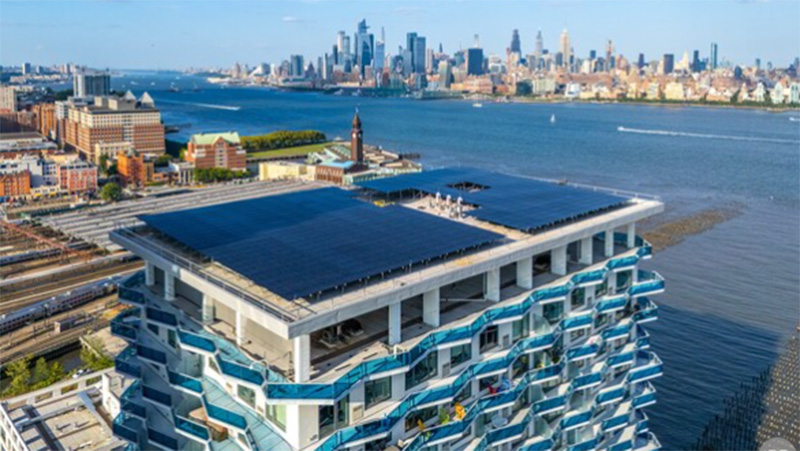
For multifamily properties, solar can be a viable solution for lowering electric bills, managing operating costs, and reducing greenhouse gas emissions. A recent example is the large-scale solar project from New York-based real estate developer, LeFrak. The developer installed an expansive rooftop solar array on a 336-unit, high-rise multifamily residential building at Jersey City’s waterfront.
The 450-panel system will offset 13 percent of the building's carbon emissions — the yearly equivalent to the carbon emitted by 179 acres of U.S. forests or 37 gasoline-powered cars. LeFrak’s nearly $1 million investment offsets energy produced by electrical systems used in the building’s common areas, including those that power elevators and lighting, as well as cooling and ventilation in the building's lobby and amenities.[2]
Mitigating Water Mayhem with Leak Detection
New innovations in leak detection technologies are helping owners and operators of multifamily properties prevent the costly, disruptive consequences of water damage.
Advanced leak detection systems can identify unusual water flow patterns that indicate potential leaks before they cause significant damage or waste. In addition, these systems can alert owners and automatically shut off valves to prevent flooding.[3]
Beyond the obvious benefits of preventing water loss, property destruction, and direct repair costs, leak detection technologies can avoid the need for long-term tenant displacement and the negative backlash that can tarnish a property’s reputation.
The Rise of Passive House Principles
Originating in Germany but adapted to meet the unique demands of large-scale residential developments across North America, Passive House standards are providing a transformative framework for multifamily housing.
One of the most impressive projects is The House at Cornell Tech on New York’s Roosevelt Island. When it was unveiled in 2017, it was the tallest and largest Passive House residential building in the world achieving the most rigorous energy efficiency standard that can be obtained—cutting heating consumption by 60-80% compared to code buildings.[4]
Energy recovery ventilators (ERVs) used to efficiently circulate fresh air are also a requirement of Passive House standards. Inside The House at Cornell Tech, air is constantly being pulled from kitchens and bathrooms, while fresh air flows into living rooms and bedrooms. Although the ventilation is uniform, individual fan units allow residents to control indoor temperatures based on their personal preferences.[5]
To learn more about Passive House standards for multifamily projects in the United States, visit PHIUS.
ACOUSTICAL COMFORT
A key driver in tenant satisfaction and retention, along with property profitability, hinges on providing and maintaining acoustical privacy and comfort. Many state and municipal laws allow tenants to withhold rent or break the lease without penalty if their right to quiet enjoyment is breached. Developers, architects, and builders all play an important role in mitigating noise disturbances. The following trends and innovations can help support long-term success in delivering effective sound control for multifamily properties.

Creating Quiet Home-Office Spaces
The work-from-home revolution has radically transformed how tenants use residences and common areas of multifamily buildings. The need to focus, hold video meetings, and conduct other business activities has heightened tenant awareness of intrusive sounds. Whether coming from inside or outside a building, noisy disruptions create friction for residents trying to work. Even operations staff such as landscapers and maintenance crews can be the source of unwanted distractions.
At Avalon Woburn in Woburn, Massachusetts, AvalonBay Communities, a leading multifamily real estate investment trust, created workspaces for residents who want to work in common areas during the day. In addition, the real estate investment trust (REIT) upgraded the apartment envelope above minimum requirements to foster more conducive work environments for residents.[6]
Forecasting and Flexibility for Mixed-Use
Combining two or more asset classes into one development provides property owners with greater economic resilience and multifamily residents with easier access to everyday amenities such as retail, restaurants, and services.
While mixed use is not a new concept, building in a flexible sound control strategy is certainly a fresh take — especially as residential tenants increasingly prioritize acoustical comfort, and commercial tenants strive to keep pace with lifestyle trends.
As the demand for mixed use spaces increases more acoustically challenging situations arise. These conditions can often be solved with higher performing floor ceiling assemblies. Maxxon provides entangled mesh mats up to ¾” with premium fabrics that, in conjunction with Gyp-Crete, can be used to enhance an assembly.
Specifying and Delivering Proven Sound Control Systems
In the past, most multifamily units featured wall-to-wall carpet which helped mitigate impact sound transmission of heavy footfalls and dropped objects from floors above.
With the popularity of Luxury Vinyl Tile (LVT) and other resilient flooring in multifamily construction, it is now routine to install a sound mat topped with gypsum to achieve an Impact Insulation Class (IIC) rating of 50. Upgrading a mat’s thickness from 1/8 to 1/4 or 3/8 can improve the IIC rating from three to five points, a level that is clearly perceptible to residents.[7]
Determining the best sound control system for multifamily projects — one that accounts for long-range acoustical considerations and provides tenant satisfaction — is where Maxxon’s expertise in underlayments and sound science truly shines.
As the leader in sound attenuation for buildings and inventor of Gyp-Crete®, Maxxon offers proven, rated, and tested floor/ceiling assemblies to deliver the desired level of acoustical comfort while also meeting or exceeding codes for fire safety and sound control. The durability and strength of Maxxon® Gyp-Crete® underlayments are ideally suited for the requirements specified by today’s resilient flooring manufacturers. In addition, Maxxon Gyp-Crete underlayments bring greater flexibility to the construction process. Unlike board-style underlayments, Gyp-Crete can be used to correct out-of-level subfloors, compensate for framing inaccuracies, and easily address transition areas between different finished flooring products.
Maxxon® Acousti-Mat® sound control mats are available in a wide range of profile heights and performance levels. Each Acousti-Mat sound mat uses acoustical fibers that create an air gap in the subfloor surface to dissipate impact sound. Topping a Maxxon® Acousti-Mat® with the solid mass of a Gyp-Crete underlayment to block airborne sound transmission, creates a robust sound control solution for multifamily construction.
Backed by more than 200 published sound tests and available in over 140 UL and ULC fire-resistance rated designs, Maxxon’s proven sound control assemblies allow architects, developers, and builders to specify and deliver the optimal level of sound control for the quiet enjoyment of residents today and in the years to come.
Wondering how to achieve the desired STC and IIC ratings for your next multifamily project? Get started with Maxxon’s Interactive System Selector or contact your Maxxon rep.
[1] Solar Industries Association’s Solar Market Insight Report. September 9, 2024.
[2] LeFrak, PR Newswire, January 27, 2025.
[3] Sherman, E., GlobeSt.com April 11, 2025.
[4] The House at Cornell Tech.
[5] Gray, A. Metropolis Magazine, January 24, 2018.

aUTHORED bY: WOODY BELFLOWER
A seasoned flooring professional with more than 30 years of industry expertise. He provides customers with knowledge and solutions as Maxxon’s Technical Services Specialist.
How to Prevent Flooring Failures Caused by Re-Emulsification.
Water-based commercial flooring adhesives were developed in response to the EPA’s directive to eliminate VOCs and odors associated with solvent-based adhesives. While these water-based adhesives contribute to a healthier environment for flooring installers and building occupants, in the presence of slab moisture, these adhesives are prone to re-emulsification.
Spotting Re-Emulsification
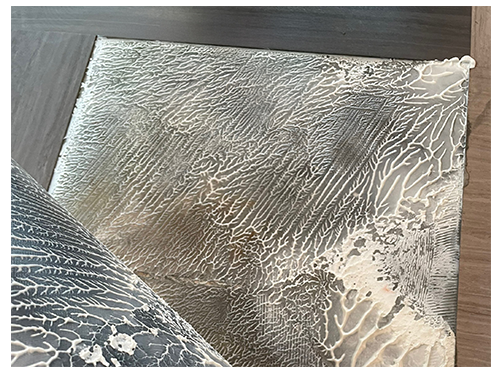
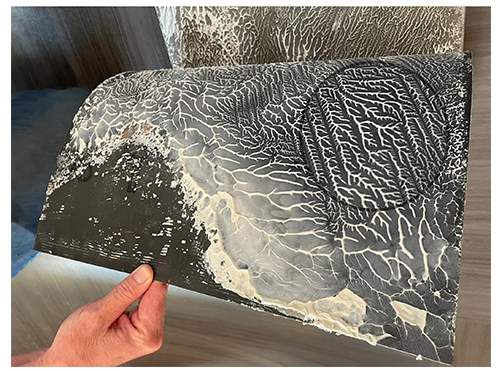
Once a water-based adhesive re-emulsifies, the adhesive can seep through the seams of carpet tile and LVT. Adhesive oozing from flooring seams, peaked seams or a darkening around the edges, where the adhesive has attracted dirt or grime, are visible clues to an issue. You may notice carpet tile curling or the floor covering separating from the floor because the adhesive has lost its tack, you may also see peeling, buckling or doming. These are all telltale signs that something's going on beneath the floor covering.
Why Failures Happen
In my experience, re-emulsification of adhesives is typically triggered by a change in the environment underneath the floor covering that causes slab moisture to rise to the surface. If the moisture can’t escape through the floor covering, the water and pH build up underneath. This excessive moisture build-up causes these water-based adhesives to re-emulsify, leading to major flooring failures and costly re-dos.
Where and When to Expect Moisture
Any commercial environment directly on-grade or below grade is highly susceptible to moisture driving up from the substrate or through the substrate from the earth, especially when a moisture vapor retarder wasn’t used or has eroded over time. Issues of failure may appear within six weeks, six months, six years or more, and they are very common.

Challenges After the Fact
Addressing moisture after the flooring has been installed and the building is occupied exponentially increases costs and difficulty. Moving people, furniture, computers, and other peripherals adds more expense, inconvenience, and complexity to the repair process.
Testing is Non-Negotiable
To avoid the risk of re-dos and dissatisfied customers, the most important advice I can give is to perform moisture testing. If you don't know the rate the concrete is emitting moisture or how much moisture is present in the slab, then you're rolling the dice on installation. You need to evaluate the substrate based on the flooring manufacturers’ guidelines, commonly using approved moisture-testing methods, ASTM 1869 and ASTM 2170. A moisture impedance meter, which simply measures a very small portion underneath the surface of the slab, is only an indicator of moisture and not a suitable alternative to ASTM tests.
If a flooring failure has already occurred, perform moisture testing. Testing will tell you the condition of the slab and how much moisture is present. You want to know: is it a high-pH slab? Is it a high-moisture slab? Or is it a high-moisture and high-pH slab?
Test at the Right Time
Another vital element is the timing of the tests — they need to be conducted in a time frame that’s close to installation to ensure accuracy of the readings. If moisture is present, it must be addressed prior to the installation of the flooring material. Project budgets and schedules should account for this potential scenario, especially for on-grade or below-grade installations.
Three Ways to Protect Your Project
To mitigate moisture, Maxxon offers three products — all specified up to 100% RH and up to 14 pH:
- Maxxon® Commercial MVP One is a roller-applied, ready-to-use moisture barrier which penetrates clean, porous concrete and requires a CSP of 1.
- Maxxon® Commercial MVP Two is a 100% solids two-part epoxy which requires a CSP of 3 to 4.
- Maxxon® Commercial Isolate is a roller-applied, two-part, water-based epoxy that does not require porosity or mechanical profiling. It may also be used to block the migration of contaminants in the slab.
MVP One and MVP Two are specified up to 25 MVER. Isolate is specified up to 14 pounds MVER with one coat, and up to 19 pounds MVER with two coats. To help you determine the best product for your project, view Maxxon’s Moisture Mitigation Product Selector Tool featured here.

Don’t Risk Your Business
When moisture is present and the customer doesn’t want to pay for mitigation, I've advised people to walk away. You don’t want to risk taking a project that could put you out of business.
What High-Moisture-Resistant Really Means
Another common misconception people make is believing that selecting a high-moisture-resistant adhesive eliminates the need for moisture testing or moisture mitigation. But high-moisture-resistant adhesives merely warrant they won’t break down in the presence of moisture. These products won’t protect the floor covering that's installed on top of them and they’re not going to stop moisture from escaping through the adhesive.
Everybody wants an “easy button” when it comes to moisture, but proper testing and mitigating any issues before the flooring is installed is the only effective course of action.
Have questions on how Maxxon combats moisture? Contact us to reach out to our team of experts.
Developed in Europe during the 1990s, mass timber continues to gain momentum across North America. The WoodWorks Innovation Network tracked 2,338 multifamily, commercial, or institutional mass timber projects in progress or built in the United States as of December 2024 — reflecting a skyward trajectory of interest over the past decade.
As projects sprout up across the country, mass timber is poised to transform the built environment with a list of benefits that include sustainability, design flexibility, streamlined construction, safety, and biophilic appeal.
Sustainability of Mass Timber
As trees grow, they sequester and store atmospheric carbon. When trees are converted into mass timber products, this carbon is stored in the building, which then acts as carbon storage, keeping CO₂ out of the atmosphere for the life of the structure—making it a more sustainable choice than traditional materials. In addition, mass timber helps when applying for green certification programs.
Design Versatility of Mass Timber
Mass timber can be used in designs that feature long spans, sweeping curves and other architectural signatures that bring drama and a unique identity to a building. By showcasing the natural beauty of exposed wood in expressive, structural aesthetics, architects, developers, and builders are unleashing the design versatility of mass timber to transform the built environment.
Streamlined Construction of Mass Timber
Mass timber can be more cost-effective and efficient than alternative forms of construction. The reduced weight of mass timber, compared to steel or concrete, can shorten the time needed for excavation and foundation construction. The prefabricated wood panels and pre-delivery planning sequencing allow mass timber structures to be assembled quickly and by smaller crews, thus streamlining the construction schedule and process.
Safety of Mass Timber
Unlike traditional light-frame wood construction, mass timber structures exhibit greater resistance in fires and extreme heat. Due to their size and the engineered wood process, which limits cracks or air gaps, mass timber develops a protective char layer on the surface while maintaining their structural strength internally, allowing sufficient time for safe evacuation. However, given that the structure itself can become a source of fuel, it is important to leverage design expertise in the planning phase and fire-resistance measures, such as installation of a Gyp-Crete underlayment. Download the Maxxon Fire and Sound Manual for guidance.
Biophilic Appeal of Mass Timber
Mass timber supports biophilic design, an approach that reflects the fundamental need to feel connected with nature. Research shows that biophilic design — particularly incorporating natural materials such as wood — can reduce stress, improve cognitive function, boost productivity, and enhance overall well-being of a building’s occupants.
Expertise to Tackle the Acoustics of Mass Timber
Despite its many advantages, mass timber is not without limitations, primarily acoustics. Enter Maxxon Corporation. Backed by more than 50 years of building industry expertise, Maxxon has been supporting mass timber construction since 2014 with proven acoustic isolation systems to meet the unique demands of these projects. Learn more about Maxxon’s mass timber expertise.

“We started testing with mass timber panels early on, so we understand specifically how mass timber panels work and the challenges we face,” says Evelyn Way, Lead Scientist, Acoustics, Maxxon Corporation. The lighter weight of mass timber and its use in beautiful wood ceilings are the main reasons for its acoustical complications. “Typically, you would hang a ceiling to cover the structure, but with mass timber we want to see the structure,” says Way. “Acoustic isolation is all about mass-airspace-mass construction and when you don't have that airspace and mass, then you have to do that on the top side which comes with a different set of constraints, so it's a lot more challenging.”
Advancing Mass Timber with Acoustical Testing
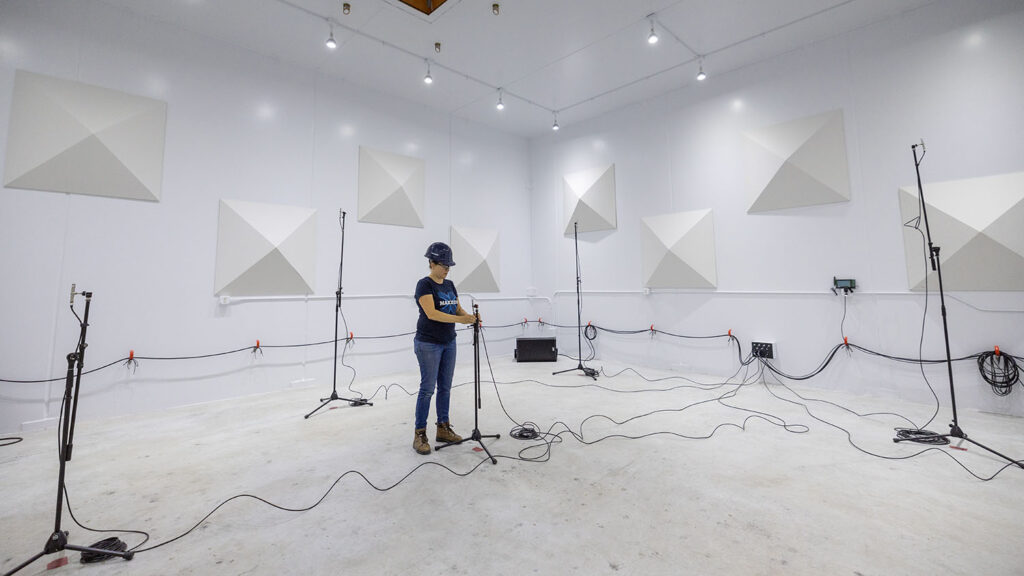
When Maxxon began mass timber acoustical testing, it used third-party accredited labs. Now expanded research and development testing takes place at Maxxon’s state-of-the-art facility, the world’s largest floor/ceiling acoustical chambers. The Maxxon Acoustics Lab is a world-class floor/ceiling testing facility accredited by NVLAP (Lab 600320-0) for ASTM E90, E492, and E2179. The Lab, designed by Jerry Lilly of JGL Acoustics, consists of two stacked 300m3 reverberation chambers sized to reliably capture data down to the 63Hz third-octave band using the VI Acoustics Trident system with GRAS and NI instrumentation. Superior isolation is achieved by separating the pre-cast chambers from each other and the surrounding structure using custom Mason Industries natural rubber isolation pads. Measurements can be performed uninterrupted during train pass-bys and all typical warehouse and construction activities. As an accredited lab, Maxxon adheres to industry testing standards. “We use standard test methods developed by ASTM — for airborne sound transmission it’s E90 and for impact sound transmission it’s E492,” says Way. Without the pressures of a for-profit testing model, Maxxon is also able to expand testing to non-standard methods to gain deeper understanding of the factors that contribute to acoustic isolation.
Obtaining Acoustical Privacy in Mass Timber
Maxxon’s testing has resulted in a wide variety of acoustic isolation systems for commercial and multifamily mass timber construction, including three performance levels for multifamily: code, acceptable, and preferred. Although there are no code requirements for commercial construction, there are expectations of acoustical privacy , and Maxxon has acoustic isolation systems that meet the needs of mass timber commercial applications as well. To determine the right assembly for your project, leverage Maxxon's System Selector.
Tailored Solutions for Mass Timber Projects
“Our main goal is to provide designers, architects, engineers, and contractors with the information and options to achieve the level of acoustic isolation they're looking for,” says Way. “If that's meeting code or providing higher levels of comfort in a commercial building, we want them to understand how to do it.” One of the things Way stresses is sufficient prudence. “With acoustics, it’s always better to build in some conservatism on the design side than to regret your decisions in the field later.”
Since 2014, Maxxon has enhanced the fire safety and acoustical privacy of mass timber buildings across the U.S. with products covering more than 8.5 million square feet. To tap into Maxxon expertise for your next mass timber project, contact your Maxxon representative
Resources

Here’s Why Maxxon Remains the Leader in Fire Safety and Sound Control for Multifamily Construction.
Science Behind Fire Safety
For over 50 years, Maxxon® Gyp-Crete® underlayment has been used in multifamily construction as an effective fire-safety solution. The gypsum component of Maxxon Gyp-Crete products is an effective heat sink. Chemically combined water is released from the Gyp-Crete between 200-300°F, absorbing heat from a fire and slowing its spread. In addition, Maxxon Gyp-Crete provides a strong, flat, level surface that can compensate for framing issues and is ready for most floor coverings. Gyp-Crete can be used to smooth transitions where different flooring products intersect, such as between a kitchen and a living space. The mass of a Gyp-Crete pour is also an important component of a complete, high-performing, sound control system.
New Demands in Multifamily Design
Over the last few decades, reducing noise transfer in multifamily construction has become an important consideration. Driven by code and occupant demands, sound attenuation is now a significant factor in multifamily design and construction. Sound transfers through buildings as impact and airborne sound. Examples of impact sound transmissions include footfalls, dropped objects, and moving furniture. In the building industry, impact sound is rated as IIC (Impact Insulation Class). Airborne sound transmission typically occurs from voices, music, and televisions. Airborne sound is rated as STC (Sound Transmission Class).
Science Behind Sound Control
As a leader in sound attenuation for buildings and fire-resistant underlayments, Maxxon offers proven, rated, and tested flooring systems to achieve code requirements for both fire-safety and sound control, while also meeting the desired levels of acoustical comfort. The Maxxon Acoustic Isolation System includes a Maxxon Gypsum Underlayment to create a solid mass that blocks airborne sound transmission; a Maxxon® Acousti-Mat® to provide an air gap that helps dissipate impact sound; and Maxxon® Acousti-Mat Perimeter Isolation Strips to optimize noise reduction and protect against sound transmission. By design, the Maxxon Acoustic Isolation System does not use mechanical fasteners. This eliminates the potential for flanking paths which aid in sound transfer. Backed by more than 200 published sound tests and over 140 UL and ULC fire-resistance rated designs, the proven assemblies of the Maxxon Acoustic Isolation System deliver performance and peace of mind for designers, developers, builders, and occupants of multifamily buildings.
Education: Protection From Falling Overboard
Recently, oriented-strand wood, cellulose fiber, and magnesium oxide (MgO) board products have been marketed as an alternate underlayment solution for multifamily properties. As the leader in fire-safety and sound control for multifamily construction, Maxxon wants to address confusion surrounding these products. Since Maxxon is committed to advancing the industry, not only through innovation, but education as well, we encourage you to evaluate the options carefully.
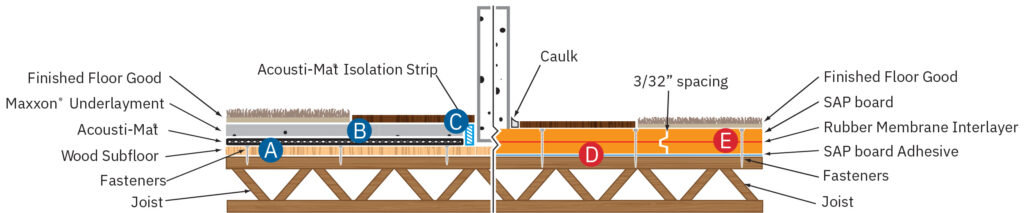
Before putting your project at risk, take a closer look at what’s beneath the board claims by asking these questions.
What is the product’s fire rating, and how many UL and ULC fire-resistance rated designs are available?
Maxxon products are Class A Fire Rated and available in more than 140 UL and ULC fire-resistance rated designs.
How many sound tests are available for the product?
Maxxon products are backed by more than 200 published sound tests. In addition, Maxxon’s headquarters is home to the world’s largest floor-ceiling sound chamber where our scientists have the resources and flexibility to conduct a range of sound tests in a controlled, NVLAP accredited (lab 600320-0) environment. With on-site testing capabilities, Maxxon has the ability to perform testing on our own products and the flexibility to pursue basic acoustics research.
Does the product require metal fasteners such as nails or screws for installation?
These mechanical methods, along with adhesives, can create pathways that allow the transmission of impact and airborne sound. The Maxxon Acoustic Isolation System eliminates any use of metal fasteners or sound transferring adhesives.
Does the installation require expansion gaps or other spaces between product and walls? Are gaps required between product and plumbing and electrical protrusions?
Gaps and spaces created in board product installation provide open channels for sound transmission. The Maxxon Acoustic Isolation System provides a fully isolated floating floor system, eliminating the gaps or spaces that permit unwanted sound transfer.
How do fasteners and gaps impact the finished flooring contractor?
Any gaps between boards, or dimples created by fasteners, will need to be filled and feathered by the flooring contractor. This adds extra, unaccounted for time to the project. Once installed, the Maxxon Acoustic Isolation System needs no additional prep. It is ready to accept virtually all finished floor goods.
Is the speed of installation quantified; how many square feet can be covered in a day?
Maxxon Gypsum Underlayment installs at a rate of 20,000-30,000 square feet per day. Other trades can resume their work the next day.
How does the product accommodate variances in the subfloor it is covering?
Framing variances happen, but before a finished floor can be installed, these variances must be addressed according to the flooring manufacturer’s flatness recommendation. Placing a board product atop an out-of-level subfloor will not resolve the issue. During installation, the Maxxon Gypsum Underlayment can correct any out-of-level subfloors and compensate for framing inaccuracies, and it easily addresses transition areas between different finished flooring products.
What environmental conditions are required for installation?
One product’s installation requirements state: “the temperature and humidity conditions of the building must closely approximate those conditions which will exist when the building is occupied.” As construction professionals know, the environmental conditions experienced during the construction phase rarely match the conditions of occupancy. The Maxxon Acoustic Isolation System can be installed at temperatures ranging from 50°F to 100°F in nearly all humidity conditions.
What happens when flooring renovations are needed?
Glue-down flooring products, adhered directly to board panels, can damage boards during removal and require board replacement during flooring renovations. The Maxxon Acoustic Isolation System allows for flooring replacement without compromising the sound control system.
Is consistent and quality installation assured?
Improperly installed board products increase the likelihood of compromising sound control. Maxxon Gypsum Underlayment is installed by trained and licensed applicators, who provide the necessary attention to detail required for a top-performing sound control system.
Can the manufacturer meet your quantity demand and delivery window?
Maxxon produces and ships products from four USA-based manufacturing plants to effectively address the order quantities and construction schedules of customers across North America. Supply chain issues are a non-issue with Maxxon.
Side-by-Side, Maxxon Outperforms Across the Board
When carefully reviewing critical details, it’s clear that Maxxon outperforms board products. Both during the construction process and throughout occupancy and renovations, the Maxxon Acoustic Isolation System remains the superior fire-safety and sound control solution for multifamily construction.
Building professionals seeking proven solutions can access Maxxon’s Fire & Sound Manual — which features an extensive list of sound-tested and UL listed assemblies organized by construction type — and Maxxon’s Interactive System Selector to identify which assembly featuring Maxxon’s Acoustic Isolation System is the best fit for ensuring a code-compliant and quieter environment for their building’s occupants. Access the links below to get started, or contact your Maxxon rep.
Resources
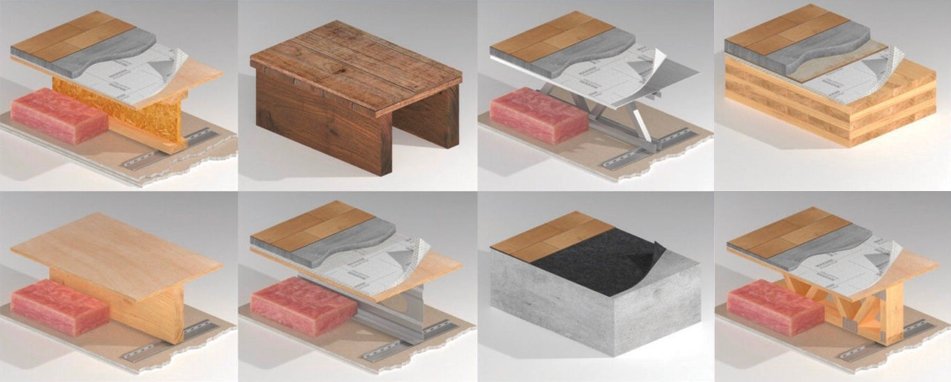
Hamel, Minnesota – 12/02/2024
Maxxon, the largest manufacturer of entangled mesh sound control products, is proud to announce its latest advancements in building envelope applications, leveraging over 50 years of industry innovation. With a focus on cost-effective, high-performance drainage and ventilation solutions, Maxxon is expanding their portfolio to include moisture management in residential, multifamily, and commercial properties.
Maxxon’s entangled mesh building envelope products, including the VenTek™ Rainscreen and VenTek™ Drain Mat, are engineered to vent, drain, and protect structures from moisture intrusion, ensuring long-lasting durability and resilience.
VenTek™ Rainscreen
VenTek™ Rainscreen offers a state-of-the-art solution for exterior wall systems. Composed of breathable fabric and an entangled mesh, this durable product creates a drainage plane that allows moisture to escape while promoting air flow, significantly reducing the risk of mold growth, rot, and other moisture-related damage. VenTek™ Rainscreen is designed for use under various absorptive sidings, such as stucco, cedar, stone, and brick, providing unparalleled moisture protection.
Key Benefits of VenTek™ Rainscreen:
- Creates an effective drainage plane in exterior wall systems.
- Enhances air flow and moisture evaporation, reducing mold and rot risks.
- Compatible with multiple siding materials for versatile applications.
VenTek™ Drain Mat
In addition, the VenTek™ Drain Mat is tailored for below-grade applications, including concrete slabs, foundations, courtyards, and balconies. This durable composite combines breathable fabric with entangled mesh, which allows air and moisture to flow in multiple directions, enabling superior drainage and ventilation. By preventing the infiltration of soil and construction debris, VenTek™ Drain Mat shields the drainage plane, making it an effective solution.
Key Benefits of VenTek™ Drain Mat:
- Promotes superior drainage and ventilation in exterior applications.
- Prevents water pooling and moisture buildup, safeguarding structures.
- Ideal for multifamily and commercial construction, enhancing overall resilience.
“Maxxon is dedicated to advancing building envelope technologies that not only meet project needs but also protect the longevity of the structure,” said Butch Kennedy, National Sales Manager. “Our VenTek™ product line exemplifies our commitment to innovation and excellence, providing builders and developers with reliable solutions to combat moisture-related challenges.”
For more information about Maxxon’s building envelope technologies and to explore how these products can enhance your next project, please visit VenTek.pro or contact our sales team 800-878-5586.
About Maxxon
With over 50 years of industry expertise, Maxxon is the leading manufacturer of entangled mesh sound control products and underlayment solutions for almost any flooring need. Our commitment to innovation and quality ensures that we deliver high-performance products that protect and enhance the durability of residential, multifamily, and commercial properties.
Minimizing disruptive and undesired sound in buildings requires an understanding of acoustics, sound transmission, and sound control. This ensures a proper acoustical isolation system can be incorporated into the building’s design.
How Sound is Perceived
Acoustics is the science of sound, and sound travels in waves, like ripples in water.
When these waves reach a person’s ears, a signal is sent to the brain that’s processed and recognized as sound. Sound is perceived in two ways: level and frequency.
Sound Level
Sound level — or how loud a sound is — is measured in decibels
The annoying buzz of an insect is 10 decibels, while the thundering roar of a jet engine at takeoff is a painful 140 decibels. We can hear sound levels change by 2 to 3 decibels,. A 10-decibel addition doubles a sound level while a 10-decible reduction cuts the sound level in half.
Sound Frequency
The second way sound is perceived is based on frequency — how high or low a sound is in pitch. This is measured in Hertz. Humans can hear sounds ranging from 20 Hertz to 20,000 Hertz, although most people lose the highest frequencies as adults. Some dogs can hear sounds as high as 65,000 Hertz. To provide real-world examples of Hertz, a low machine hum is around 50 Hertz, most voices range from 90 – 500 Hertz, and a bird’s song can be over 5,000 Hertz.
The highest frequencies people can hear have wavelengths that are less than an inch, while the lowest frequencies have wavelengths over 30 feet long — imagine the length of a school bus, or since sound waves are omni-directional, the height of a three-story building. Longer wavelengths make it harder to control low frequency sounds. In buildings, knowing how to control low frequency sounds can make a big difference in occupant satisfaction.
How Sound is Transmitted
When it comes to sound transmission, commercial and residential buildings are affected by two types of sound: airborne and structureborne.
Airborne Sounds
Airborne sounds come from voices, televisions, and barking dogs, among other sources. These sounds travel through the air and can be transmitted through walls and floors. Airborne sounds are quantified using a rating known as Sound Transmission Class or STC. To measure STC, noise is emitted from a loudspeaker in one room — a source room — into a receiver room, then the difference in sound levels between the source and receiver rooms is subtracted. The STC rating standard uses frequencies ranging from 125 - 4,000 Hertz.
Structureborne Sounds
Structureborne sounds are created by direct contact with the floor. This includes footsteps, chair scrapes, and dropped items which transmit through the building structure and radiate as sound. Structureborne sound is quantified with a rating known as Impact Insulation Class or IIC. For the IIC measurement, a standardized tapping machine is used to impact the floor. The level of the resulting sound transmitted through the floor is measured in the room below using the frequencies from 100 to 3150Hz. The IIC rating is only used for floor and ceiling assemblies. It’s not applicable to walls.
Lab Tests and Field Tests
Because some buildings require minimum STC and IIC values, it’s important to check sound codes early in the design process. Both STC and IIC are lab measurements, performed under highly controlled circumstances, and they measure only the performance of the assembly being tested. Measuring an actual building is more complex because it’s impossible to isolate the interactions between walls, floors, and ceilings. However, tests taken in buildings — also called field tests — are sometimes required by code. Field tests are more affected by the conditions in the room, like curtains or furnishings. Different normalizations are used, with the letter A (“apparent”) used when we normalize to the size and conditions in the room: ASTC and AIIC. The letter N (“normalized”) is used when we normalize to normally furnished small rooms like bedrooms or offices: NNIC and NISR. NNIC and NISR are included in the 2024 IBC code revision to establish code compliance in existing buildings. The industry previously used FSTC and FIIC to identify field tests, so you may also see them referenced this way.
Minimizing Sound Transfer
In designing a building, there are four main ways to minimize sound transfer.
Increase the Mass
The greater the mass (or weight) of an assembly, the more efficient it is at blocking airborne sound transmission.
Design for Airspace
A common way to reduce structureborne sound is to take advantage of the depth of the structure by installing a ceiling, which can also help minimize airborne sounds.
Add Absorption
Adding insulation can enhance the sound isolation ability of a ceiling cavity by damping the cavity. However, thicker insulation only provides marginal benefits.
Create Structural Breaks
An efficient way to minimize structureborne sound transfer is with a structural break that reduces vibration transfer by creating a completely isolated floor. Even small structural breaks make a big difference.
Effective Sound Mitigation
To ensure each of these sound minimizing elements work most effectively, it’s important to avoid flanking paths. A flanking path is any way that sound transfers around the sound isolation system. Unintentional flanking paths can be created by direct connections through the isolation system. Even small gaps around baseboards can be a big problem because they permit unwanted sounds to leak through.
Ensure a Robust Acoustic Isolation System
As leaders in sound control for the building industry, Maxxon provides proven products and selection tools to deliver robust acoustic isolation systems for commercial and residential buildings. Our tested assemblies provide rated systems to increase mass, design for airspace, and create structural breaks, including systems that can increase the IIC rating by up to 20 points. Each robust acoustic isolation system includes a Maxxon® gypsum concrete underlayment, a Maxxon® Acousti-Mat®, and Maxxon® Acousti-Mat Perimeter Isolation Strips to optimize noise reduction and protect against the sound bleed of flanking paths. Using our Fire & Sound Manual — which features a full listing of assemblies backed by third-party sound tests and UL fire ratings by construction type — and our Interactive System Selector, you can identify which acoustical isolation system is the best fit for ensuring a quieter and more comfortable environment for your building’s occupants.
To determine the most robust acoustic isolation system for your next project, contact your Maxxon representative.
As technology, cultural shifts, and personal preferences change the ways we live and work, luxury residences are keeping pace with first-class amenities and designs to meet the moment. Since the luxury home market provides inspiration for home building at every price point, this article explores fifteen key trends and enhancements upscale homeowners are incorporating into new construction and renovation projects.
The High-Tech Home
Enabling homeowners with the ultimate in convenience, security, and comfort, technology is an essential component of today’s luxury homes. These smart homes feature integrated home automation systems that allow homeowners to control multiple aspects of the living environment from a single interface.
Whether through a smartphone app that provides system access from anywhere in the world or by a voice-activated assistant that follows hands-free commands, homeowners are leveraging technology to improve their home’s functionality, livability, and efficiency.
Next-Level Energy Intelligence
A quantum leap beyond the basic programmable thermostat, today’s smart energy management systems monitor real-time energy use and make automatic adjustments based on a home’s occupancy and weather conditions. Some systems even incorporate machine learning that predict and adapt to homeowners' habits to streamline efficiency and comfort.
Comfort: The Timeless Trend
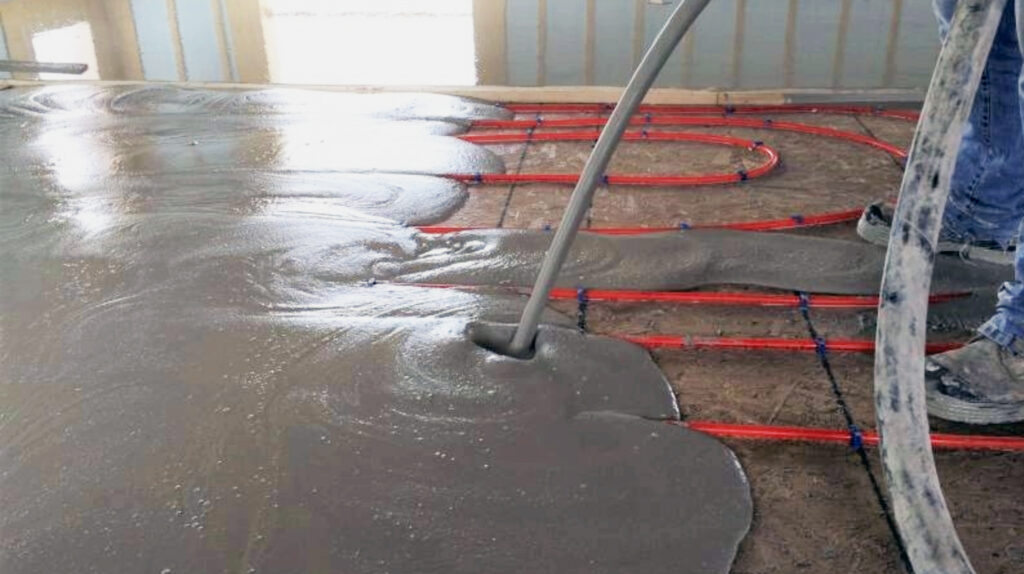
For the ultimate in comfort, luxury homes rely on the warmth and energy efficiency of in-floor heating systems. Ideal under stone, ceramic tile and other high-end floor coverings, radiant floor heat keeps residents and guests cozy and comfortable especially in colder months. To optimize the performance of in-floor heating systems, Maxxon® offers Gyp-Crete® Radiant underlayment. Specially formulated to withstand the demands of in-floor heating systems, as a tested and proven gypsum underlayment, Gyp-Crete Radiant creates a smooth, hard surface that ensures uniform radiant heat distribution. It flows smoothly over in-floor heating tubes and seals perimeter walls to eliminate baseboard drafts. Gyp-Crete Radiant also provides superior sound attenuation when used with MAXXON® Acousti-Mat® products and is available in more than 140 UL & ULC fire-resistance rated designs.
With the stability and compressive strength of Gyp-Crete Radiant for in-floor radiant heat systems, luxury home builders can confidently deliver on the most timeless trend of all: comfort.
Sci-Fi Style Security
To keep occupants and museum-caliber décor protected, modern security systems far surpass traditional alarm systems. From smart locks on timers, doorbell cameras with two-way communication, motion sensors that can distinguish between pets and intruders, and facial recognition technology that grants personalized access and restricts entry to private spaces like vaults and wine cellars, tech-enhanced security systems are elevating the definition of safe haven.
Earth-Loving Luxury
For eco-conscious luxury homeowners, living graciously and sustainably is a priority being incorporated into designs and building practices.
Superior Solar
Many luxury homes are now being built with pre-installed solar panels or with electrical and structural elements to accommodate future solar panels. Solar roof tiles that blend seamlessly with roofing materials are an upscale option for maintaining aesthetics while generating clean energy. Battery storage systems are also more common, providing homeowners with reserved energy during peak hours or power outages.
Building In Sustainability
To reduce transportation emissions and bolster local economies, the use of sustainable and locally sourced building materials is key in the luxury space. Reclaimed wood for flooring and accents and recycled glass countertops are top trends. Stone and sand from local quarries reduce the carbon footprint of both decorative and structural elements.
Smart Appliances
For homes more likely to display family photographs than a Sotheby’s winning bid, smart appliances and fixtures can provide a taste of attainable luxury. With concierge-level features including refrigerators that create shopping lists, smart ovens that cook perfect meals from scanned QR code instructions, sensor-driven faucets for touchless operation, and smartphone-controlled washers and dryers, high-tech appliances bring upscale amenities and conveniences to the mainstream.
Wise Water Use
Water conservation is also a priority, and many homes are integrating sophisticated rainwater systems, greywater recycling, and smart irrigation systems that adjust watering schedules based on weather forecasts and soil moisture levels. Living walls and green roofs are showstopping ways to visual interest, provide insulation, and help manage stormwater runoff.
EV Envy
With the rise of electric vehicles, many luxury homes feature EV charging stations in the garage. When linked with the home's energy management system, these EV stations can align with the charging times based on electricity rates and solar production.
Wellness Upgrades
The global pandemic dramatically heightened a commitment to health, well-being, and the home wellness trend. Appointed with top-tier fitness equipment, impact-absorbing flooring, and high-end sound systems, today’s luxury homes feature thoughtfully designed fitness spaces that rival high-end health clubs.
Sanctuary Spaces
For soothing the mind, body, and spirit, luxury homes are also including meditation and massage rooms. Designed to convey an oasis of calm, these dedicated, personal sanctuaries beckon homeowners to restore a well-being through relaxation and reflection.

Breathing Easier
The pursuit of wellness extends beyond dedicated spaces with sophisticated air purification systems that permeate every corner of luxury residences. From whole-house HEPA filtration systems that remove the tiniest particles from the air to UV light purification
systems in HVAC units neutralize bacteria, viruses, and mold, luxury homeowners are pursuing the highest level of indoor air quality.
Fashionable Al Fresco
Elaborate outdoor kitchens featuring wood-fired pizza ovens, wine fridges, and dishwashers along with supremely comfortable, weather-resistant dining areas allow homeowners to entertain guests al fresco without compromising elegance or style.
Pools Beyond Compare
While private pools have long been a luxury feature, today's designs emphasize both aesthetics and technology. Infinity edges, natural rock formations, waterfalls, and color-changing LED lighting create visually stunning water features. Hot tubs with advanced hydrotherapy elements and ice-cold plunge pools combine relaxation with muscle recovery or an immunity-boost. Equipped with smart filtration and cleaning systems, maintaining these spa-status pools is easier and more efficient than ever before.
For more on how Maxxon’s Gyp-Crete Radiant, contact us to learn more.
Like every industry, the architecture profession continues to evolve. The desire for greater sustainability, mixed-use developments, and adaptive reuse designs, along with changes to building codes and lifestyle preferences are just a few of the recent reasons architects need to enhance their training and skills with continuing education on a regular basis.
More importantly, to maintain membership in the American Institute of Architects (AIA), licensed architects are required to earn continuing education credits each year, and most US states have continuing education requirements for licensure renewal. For architects obtaining or renewing their license, many AIA-approved courses can be used to satisfy both licensure and AIA requirements.
How Credits Are Measured
AIA measures continuing education credits in Learning Units (LUs). State licensing boards measure continuing education with varying terms including CE, CE Hours, or Professional Development Hours (PDH). One hour of continuing education earns one LU, CE or PDH. AIA members are required to complete 18 LUs from registered AIA or Credential Evaluation Service (CES) providers each year. Of the AIA-required 18 LUs, 12 must be focused on health, safety, and welfare (HSW).
Check Requirements for Each Jurisdiction
For license renewal, check with your state’s licensing board for its specific continuing education requirements. If you are licensed to practice in multiple jurisdictions, check the renewal licensing requirements of each licensing board.
Stay Current with Maxxon
To help architects expand their knowledge, stay current on industry advancements, and remain in good standing with the AIA and their licensing boards, Maxxon offers five AIA-approved continuing education courses. Upon completion, each participant will earn one LU|HSW credit.
Lunch. Learn. Earn.
Maxxon makes the continuing education process easy with free lunch-and-learn presentations. Simply choose a course and we’ll bring the presentation — and lunch, on us — to your office. For those working remotely, we also offer our continuing education courses online.

Featuring Five AIA-Approved Courses
Acoustic, Fire Safety, and Sustainable Solutions: Underlayment Best Practices
This course explores the various cement underlayments used in construction. It focuses on distinct features created to meet specific project needs. Benefits of gypsum underlayments include fire safety, acoustic performance, low VOC emissions, and sustainability, which contribute to LEED certification. LEED certification contributes toward GREENGUARD certification. They also help comply with building codes for construction ranging from mass timber to concrete structures. The importance of moisture vapor barriers will also be discussed, offering practical insights for design professionals.
Building Smarter: Acoustic Isolation Systems vs. Composite & Magnesium Oxide Cement Board Products
Discover what Acoustic Isolation systems are and how they perform vs. traditional board products like magnesium oxide (MgO) board and other composite board products in fire safety, sound control, durability, and efficiency. This webinar, led by Maxxon’s underlayment and acoustical experts, will explore board products and their capabilities and how gypsum solutions deliver superior results for architects, contractors, and developers. Gain actionable insights to protect your projects, investments, and reputation with smarter building practices.
The Sound Decision: Floor-Ceiling Assemblies in Multistory Construction
This course examines how the acoustic environment influences occupant wellness and satisfaction. Participants will learn key sound science concepts, methods for measuring sound in buildings, and relevant codes and standards for various building types. By the end, you'll be equipped to choose the right sound control system to create acoustic environments that enhance occupant experience and well-being.
Surface Applied Moisture Vapor Barriers
Concrete slabs are susceptible to moisture vapor emissions from the ground and varying humidity conditions. In this presentation, participants will learn how to assess the potential need for a vapor barrier, the types of vapor barriers available, and how to test the moisture content of a concrete slab. Participants will also learn the basic installation process of a surface-applied moisture vapor barrier.
Fire and Acoustical Considerations in Cross Laminated Timber Construction
This course examines the various types of Mass Timber Construction, focusing on the fire and acoustical considerations associated with Cross Laminated Timber Construction. Topics include:
· The different types of mass timber assemblies and the benefits of each
· The reasoning behind two-hour fire ratings
· The role gypsum underlayments play in fire resistance
· Planned changes to the International Building Code
· Pitfalls and solutions to sound control in mass timber assemblies
Abate & Mitigate, or Encapsulate
This course equips construction professionals with the knowledge to confidently distinguish between mechanical and chemical abatement methods and how to choose the right approach for the jobsite.
Need help deciding which continuing education courses are right for your firm?
Contact Maxxon and we’ll offer recommendations