Renovation Ready: Evaluating Concrete Slabs for Long-Term Flooring Success
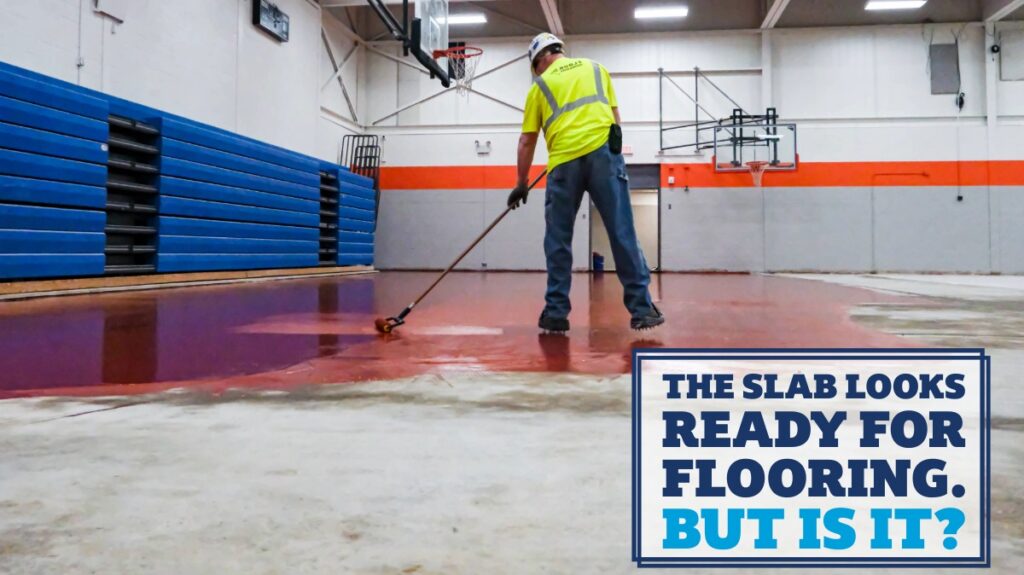
Renovation work often comes with a few unknowns, and the condition of the existing slab can be one of the biggest variables. Once old flooring is removed, what remains may include adhesive residue, contaminants, and a surface that may need additional preparation before a new system can be installed.
This is where the questions start. Should everything be removed through abatement, managed through mitigation, or left in place and encapsulated? There is not a single answer that works for every project. The right approach depends on budget, the condition of the slab, the goals of the project, and how much uncertainty the team is comfortable carrying into the finished floor. Taking the time to understand what you are working with can help guide that decision and lead to more predictable results over time. This article takes a closer look at each option and highlights a few considerations that can help inform contractors of the right solution for the project.
Beyond the Surface: Understanding Subfloor Abatement
In flooring applications, abatement generally refers to the process of safely removing or managing hazardous materials. This most often includes asbestos in the flooring or older adhesive systems found in existing buildings. The goal is to reduce potential risk while preparing the surface for what comes next. There are two common approaches used in the field, mechanical and chemical methods. Each approach can lead to a different slab condition, which is why it is important to understand both how materials are removed, and what the surface looks like afterward.
Concrete mechanical abatement involves physically removing materials from the slab. This can include manual scraping, grinding, sanding, or shot blasting. From a preparation standpoint, this approach can create the texture and porosity needed for many flooring systems to bond more consistently, which is one of its main advantages. At the same time, it is a more involved process. It typically requires more labor and additional measures to control dust to protect the surrounding areas. It also requires both the flooring and adhesive to be removed separately, which can add time and complexity to the overall project.

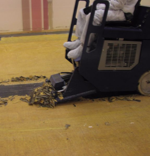
There is also the possibility of altering the slab surface during removal. More aggressive methods of mechanical abatement can open the surface more than intended or create inconsistencies that require additional preparation. What begins as removal can sometimes lead to further surface repair before installation can move forward. Even with these considerations, mechanical abatement is often chosen when the goal is to create a clean and consistent starting point for the next system.
Concrete chemical abatement takes a different approach by using solvents to break down adhesives so they can be collected and removed. This method can help simplify removal and reduce the need for heavy mechanical equipment, especially in spaces where dust or disruption needs to be minimized. It can be particularly useful in renovation environments where maintaining a cleaner work area is important. On the surface, it often appears to be a more controlled process. However, it introduces a different set of considerations that are not always immediately visible.
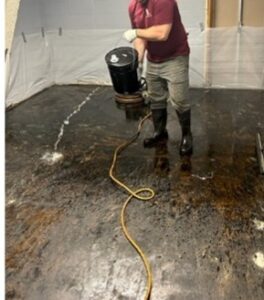
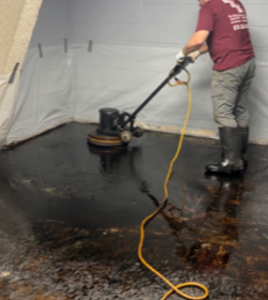
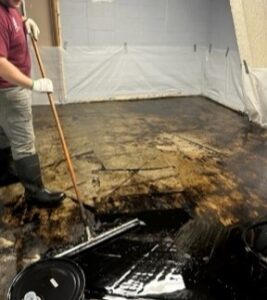
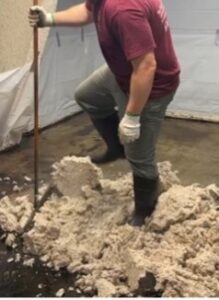
Some of the materials used during removal can be absorbed into the concrete. Over time, residual components may remain in the slab and gradually move back toward the surface. This can influence how new adhesives bond and, in some cases, lead to performance issues that are not immediately obvious. It can also make it more difficult to determine the root cause if problems arise later in the life of the floor. As a result, while chemical abatement can streamline the removal process, it often shifts the focus to how the slab is managed after the work is complete.
What Happens After Adhesive Removal
Removing older materials can expose new variables that need to be considered before moving forward. Older adhesive systems, particularly those used prior to the late 1990s, had a higher tolerance for moisture and pH. As formulations have changed over time, newer systems tend to be more sensitive to those same conditions. This shift has influenced how flooring systems perform, especially in renovation settings.
Older adhesives were solvent-based and less sensitive to water, while newer water-based adhesives require closer attention to slab moisture. Removing the old adhesive can also remove a layer that was not affected by moisture. Without that layer, moisture can move through the slab and interact with the new flooring system. At that point, the project team typically has a few options:
- Proceed with installation and accept some level of uncertainty
- Select materials that are designed to handle higher moisture conditions
- Take a more controlled approach by incorporating a mitigation system
The best choice always comes back to understanding the condition of the slab and how it may affect long-term flooring performance.
Subfloor Moisture Control
Prior to selecting a moisture mitigation approach, the slab should be evaluated using industry-accepted moisture testing methods such as ASTM F1869 and ASTM F2170. Concrete pH should also be measured, as both moisture and alkalinity can influence the long-term performance of flooring systems.
Once testing results have been reviewed, the next step is to determine the most appropriate strategy for the conditions present. Not every slab requires the same solution. Key factors often include moisture levels, surface profile requirements, overall slab condition, and whether contaminants may still be present.
When moisture is a concern, the goal is to create a stable substrate that supports the performance of the flooring system above. This often begins with proper surface preparation to ensure the concrete is clean, sound, and capable of accepting subsequent materials. The level of preparation required will vary depending on the condition of the slab and the performance requirements of the project.
When concrete contamination is part of the equation
In many renovation projects, particularly those involving chemical abatement, moisture may not be the only consideration. Residual solvents or adhesive components can remain in the slab and influence how new flooring systems perform, even when moisture levels appear to be within an acceptable range. Therefore, it is imperative to ensure the surface of the slab is free from anything that can be deemed as a bond breaker.
If a chemical abatement was done, Maxxon has a warranted system that includes a product meant for cleaning the slab surface called Maxxon Commercial Profile. Profile is a spray applied cleaner and concrete profiler designed to help remove contaminants and insoluble salts from the concrete surface while creating a concrete surface profile ranging from CSP 1 to 4. It helps improve surface porosity without the need for shot blasting, and reduces high alkalinity, creating a cleaner and more receptive substrate for primers, moisture mitigation products, and underlayments. Profile is biodegradable and can be cleaned up easily with water.
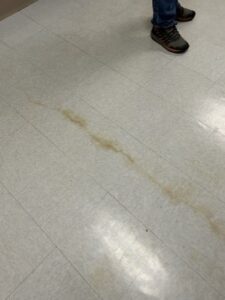
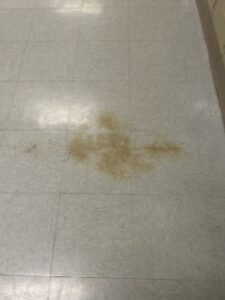
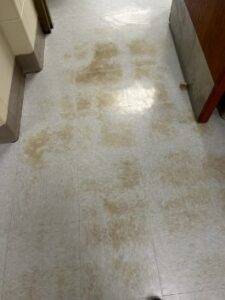
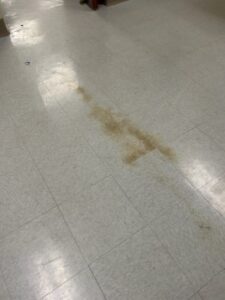
Once the surface is clean, Maxxon Commercial Isolate is designed to lock down contaminants and manage moisture within the slab and limiting its ability to migrate into the flooring system above it. Isolate can help create a more stable surface to accept new flooring finishes. Rather than relying on complete removal, this type of approach focuses on controlling what remains in the concrete and reducing the potential for later issues.
Choosing the right mitigation approach does more than meet a specification. It directly affects long-term flooring performance. Because moisture-related issues and bond failures are common in flooring installations, addressing slab conditions early can help reduce risk and support more consistent results.
Achieving the desired result depends on selecting the right products and working with an experienced partner who understands the conditions of the slab and the demands of the project. Maxxon offers moisture mitigation, surface preparation, and chemically abated slab systems designed to work together as a warranted solution. When installed as part of a qualified Maxxon system, these applications are backed by Maxxon’s Limited Lifetime Warranty, which covers both material and labor, should issues arise. This added level of protection can help reduce uncertainty and provide greater confidence throughout the life of the floor.
Benefits of Concrete Slab Encapsulation
Concrete slab encapsulation is another option that may be considered when full removal is not practical. Instead of removing materials, the goal is to seal them in place, so they are no longer exposed or able to interfere with the new system. This approach can offer advantages in encapsulating products for consideration; penetrating and bridging.
Penetrating encapsulants are designed to move into the material and bind it together. Bridging encapsulants create a layer over the surface, forming a barrier between the required depth for concrete slab encapsulation to be considered.
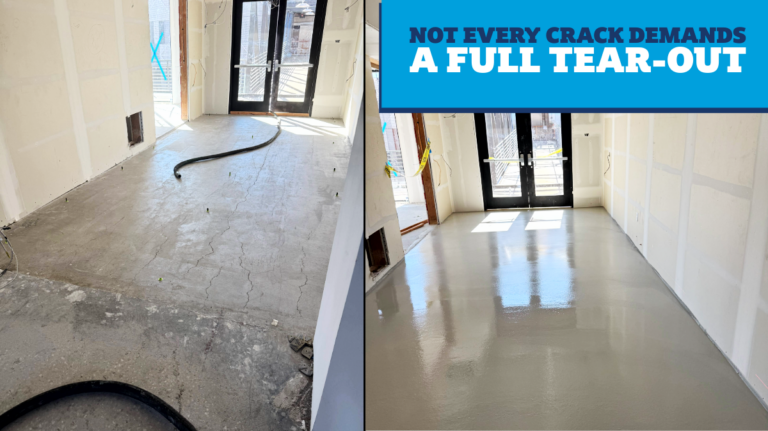
Gyp-Crete® underlayments are often used to encapsulate well bonded asbestos-containing floors. They create a new, smooth substrate over the existing floor, providing a cost-effective way to reset the surface and prepare it for new finishes. This approach can help reduce demolition costs, minimize disruption, and keep projects moving forward. The primary consideration is the additional floor height created by the encapsulation system, which may require evaluation of transitions, door clearances, and adjacent floor elevations during project planning.
The Bottom Line
Every renovation project brings its own set of conditions, and there is no single approach that works in every situation. Abatement changes the surface. Mitigation builds on that surface. Concrete slab encapsulation works around it. The most reliable outcomes often come from taking the time to understand the slab and selecting an approach that aligns with those conditions. When the process, materials, and expectations are aligned, the result is a system that performs more consistently over time.
For more information on any of the Maxxon Products mentioned, please reach out to your local Maxxon Sales Representative or contact us on Maxxon.com.