At mid-year, multifamily housing charts an upward trend for new project starts as work-in-progress accelerates toward completion. In the race to deliver more rental units, residential architectural teams continue evolving in response to shifting market conditions, changing tenant expectations, and effective building product solutions.
Speed to market satisfies short-term gains. For long-term value, multifamily project teams know these properties must attract, retain, and serve residents for decades. They will be evaluated not only on how quickly they delivered, but on how well they perform acoustically, operationally, and financially throughout their lifespans.
With 50 years of expertise and a problem-solving mindset, Maxxon works with architectural teams to anticipate and tackle their toughest challenges. Data-driven lab and field work support an extensive portfolio of floor underlayment and sound-attenuation products. Maxxon’s made-in-the-USA solutions are relied on by all types of multifamily and commercial structures, from trusted, light wood construction to emerging trends, like mass timber.
Five trends shaping multifamily design today:
- Mid-year complexity
- Hospitality-influenced design
- Acoustic comfort is nonnegotiable
- Sustainability supports wellness
- Compressed schedules create lasting consequences
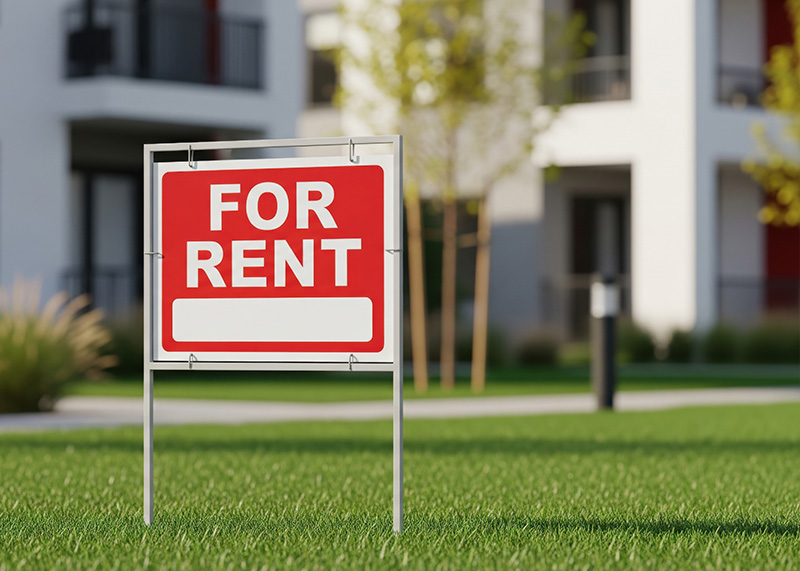
Trend 1: Mid-year complexity in market conditions
Multifamily building owners and developers face a competitive and complex environment. “Tenants expectations are high, but affordability remains a concern. Interest rates are up, material and labor costs are up, and construction timelines are condensed,” observes Phil Ciesiulka, Maxxon’s executive vice president of sales and marketing. “There’s a desire to meet the market’s need for new multifamily units, and there’s a higher cost to accomplish this.”
In the first half of 2026, multifamily construction starts are up 19% and permits are back above their two-year average. The figures suggest continued pipeline activity through 2026, according to Richard Branch, chief economist for the American Institute of Architects (AIA).¹
The reasons for renting are as diverse as the residents and the properties themselves. Many affluent adults are renters by choice, stabilizing the luxury living category. The senior housing category grows steadily as those ages 55+ trade single-family homes for the convenience of multifamily living.²
Meanwhile, barriers to homeownership remain historically high: CBRE reported a 105% monthly cost premium to buy versus rent, an estimated shortage of 3.4 million single-family homes, and more than half of outstanding mortgages locked in at rates below 4% – discouraging existing owners from selling and sustaining rental demand.³
Renters also face a shortfall in affordable options. On both coasts, rent-to-income ratios commonly exceed the 30% threshold.⁴ In response, government leaders are offering incentives for multifamily developers, and some jurisdictions have made affordable units a requirement of newly constructed rental housing.⁵˒⁶ Designing properties where diverse populations feel welcome, safe, and comfortable benefits all residents.

Trend 2: Hospitality-influenced design
Today’s renters arrive with expectations shaped by hospitality design, wellness culture, and high-end residential aspirations. The design language of successful multifamily properties speaks to prospective tenants as modern and contemporary, bright and natural, inviting and comfortable, individualized yet connected, and highly functional yet low maintenance.
Multifamily designs incorporate open floor plans with vaulted and exposed ceilings, full-height glazing, access to private outdoor spaces, and natural tactile materials such as exposed timber, stone, and clay textures. Warm, neutral, earthy tones complement personalized furnishings, while matte finishes deliver durability with easy maintenance.
Beyond unit interiors, hospitality-influenced design extends to common amenities: co-working and gaming lounges, fitness centers, pet-friendly green spaces and gardens, and seamless connectivity are now baseline expectations. Architects are also designing concierge-inspired staff spaces that support expanded property management responsibilities – from hosting tenant activities to managing cybersecurity and individualized building access.
These expectations have direct implications for product specifications. Where a polished concrete aesthetic is desired, Maxxon VersaTop products deliver an approachable, industrial-modern look with the tactile quality of polished concrete – without mechanical prep or polishing.
Where luxury vinyl tile (LVT) or other floor coverings are preferred, Maxxon’s Gyp-Crete and Commercial Pro portfolio offers high-strength products that creates a smooth, level substrate to ensure floor covering integrity. Natural tones, wood-look planks, and geometric patterns all translate well on a properly prepared surface. Investment in design quality and performance can yield measurable occupancy advantages.
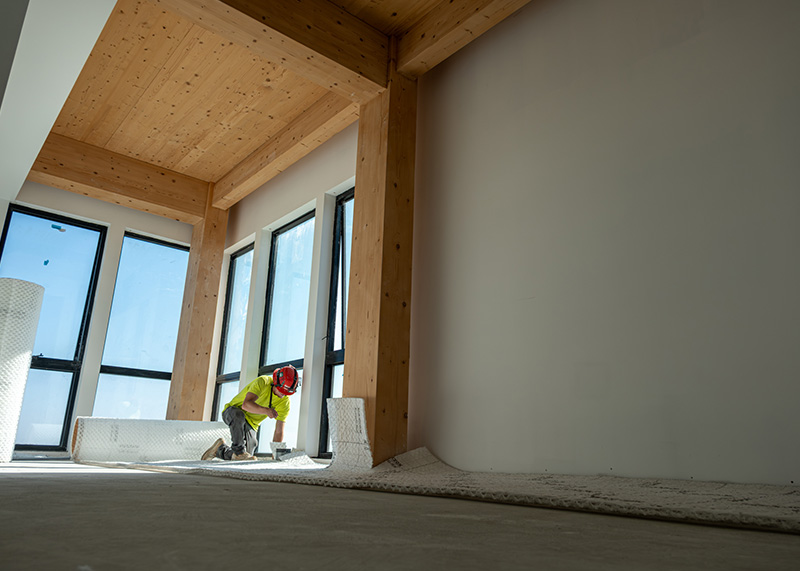
Trend 3: Acoustic comfort is nonnegotiable
Designing multifamily properties to retain existing tenants beyond their initial lease is a strategic advantage. “Multifamily operators are strategically choosing to maintain occupancy rates rather than aggressively pursuing rent increases on newly signed leases,” reported CBRE. “Renters are renewing their existing leases at historically high levels (57% of all leasing activity).”³
Lease renewals are one of the clearest indicators of a multifamily property’s financial health, and quiet living is essential to earning them. Sound control is no longer a premium specification reserved for luxury buildings; it is a baseline expectation for all multifamily residents and a principal driver of satisfaction and retention.
Buildings that fail to meet acoustic thresholds can generate costly complaints. Beyond day-to-day disruptions, excessive noise may violate building codes, state laws, or local ordinances – leading to fines, legal disputes, and turnover that impact the bottom line. The consequences of under-specifying acoustical systems can be exceptionally expensive to remedy post-construction; in timber-frame construction, acoustical floor assemblies are not optional; they are fundamental to code compliance and a livable project.
Architectural specifiers play a critical role in protecting the peace of mind for both owners and renters. Select an acoustic isolation flooring system with proven, third-party tested performance; one that increases mass, designs for airspace, and creates structural breaks. Insist on proper installation by qualified applicators. And stay firm on the spec.
Maxxon’s floor systems can increase Impact Insulation Class (IIC) ratings by up to 20 points and Sound Transmission Class (STC) ratings by up to 15 points over bare wood frame systems. Heidi Larsen, Maxxon’s West region sales representative, warns that as budgets tighten, performance can suffer: “Bringing a system down to an 1/8-inch sound mat with 3/4-inch gypsum barely hits code. They’re going to start getting more complaints out of their tenants than they typically would with a better system.”
Maxxon’s representatives consult with architectural teams on product selection and specification, with key attention to transitions between hard-surface and carpet areas and flooring-to-wall details. The Maxxon Interactive System Selector and Fire & Sound Manual help design teams identify the right acoustical isolation system for their project.
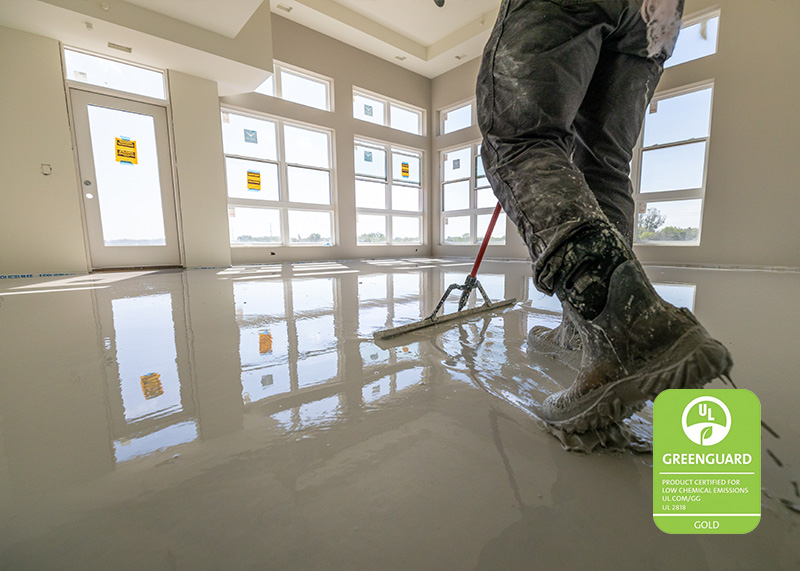
Trend 4: Sustainability supports wellness
Multifamily buildings certified to green building and wellness standards command competitive advantages in leasing, financing, and long-term operating costs. Certification programs, including LEED and WELL, are increasingly embedded into owner briefs and developer pro formas. In some markets, their criteria are integral to municipal policy and incentive programs.
Occupant health and well-being are now prioritized alongside energy and water efficiency. Acoustic comfort, access to daylight and outdoor views, thermal comfort, and indoor air quality are common performance criteria. Architects and specifiers are regularly navigating documentation for low-VOC emissions, recycled content, and Environmental Product Declarations (EPDs).
Maxxon’s representatives assist design teams in maximizing program credits across multiple categories. A large selection of GREENGUARD Gold Certified underlayment and sound control mats supports both acoustic comfort and indoor air quality goals across LEED, WELL, and similar programs.
Architects carry the responsibility for health, safety, and welfare (HSW) across all their projects. This can feel especially heavy in multifamily residential buildings. AIA members are required to complete 18 hours of continuing education annually, with 12 hours in HSW topic areas. Assisting with architects’ professional development, Maxxon offers introductory, intermediate, and HSW courses available as in-person presentations, including “Acoustic, Fire Safety, and Sustainable Solutions: Underlayment Best Practices.”

Trend 5: Compressed schedules create lasting consequences
Decisions made during schematic design carry lasting financial consequences. Construction timelines in multifamily projects are getting tighter, budget pressure is ever-present, and the imperative to reach rental income quickly is reshaping how projects are designed, sequenced, and when critical decisions must be made.
According to the AIA’s 2026 Work-on-the-Boards survey,¹ the leading causes of project delays include client indecision (20.1%), changing market conditions (17.9%), insufficient construction budgets (17.5%), and financing problems (14.6%). Meanwhile, 61% of survey respondents report that construction administration is taking longer. This means decisions are being made earlier in the process, often before contractor input. This includes decisions about flooring systems, acoustical assemblies, and structural performance.
Architects and specifiers who have established trusted relationships with manufacturers are better positioned to navigate these pressures. Maxxon’s representatives consult with multifamily architects early in the design process to get ahead of problems before they reach the field.
“The #1 concern is budgets, and making sure the project pencils out when it comes to completion date,” Larsen emphasizes. “Schedules are being pushed so tightly. They’re putting applicators in situations where the buildings are not ready for the underlayment to be poured. For the floors to perform as required, they should go in after the entire building is enclosed – when the roof and the windows installed, the interior can be maintained at a good temperature, the floors are all dry, and preferably, after the drywall.”
The downstream consequences extend beyond installation quality. Larsen observes that rushed framing, a predictable outcome of compressed construction, directly affects floor flatness, acoustical performance, and substrate quality for floor finishes. She explains, “Applicators now are having to use lasers and stringlines on every single job just to get that floor flatness tolerance.”
Accelerated timelines also lead to specifications being copied from a prior project rather than tailored to the current one. This shortcut can result in unintended performance reductions and invalidated warranties. As Larsen illustrates, a basic interior wood subfloor might specify an underlayment with compressive strength of 2,000 psi, but many multifamily projects with heavy traffic and LVT or hard-surface finishes require 3,000+ psi. Specifying the lower product means the floor covering warranty is void. Simple mistakes carry significant repercussions.
Design with confidence
In a market defined by overlapping pressures, architects and specifiers benefit from partners who understand the full picture of multifamily design and construction. Maxxon’s representatives offer personalized consultation and project assistance. They can review specifications for accuracy, performance, and compliance; provide technical guidance on construction sequencing; and share flooring application best practices.
Whether a project calls for a gypsum underlayment system for a timber-frame assembly, a decorative concrete wear surface, a high-performance acoustical assembly, or a moisture-resistant high-psi substrate for LVT, Maxxon offers a proven solution.
Find local representatives, product information, technical documents, and design resources at Maxxon’s website. Specification data, BIM files, and CAD drawings also are available through CADdetails, Sweets, MasterSpec/Deltek, and SpecLink.
1 American Institute of Architects (AIA); Richard Branch, AIA Chief Economist, “2026 Q2 Economic Outlook for Design and Construction,” references include U.S. Census Bureau data; May 22, 2026; https://aiau.aia.org/course/details/2026-economic-update-bundle
2 Building Design+Construction, “Multifamily Annual Report 2025,” https://www.bdcnetwork.com/building-sector-reports/multifamily-housing/news/55332756/download-the-2025-multifamily-annual-report
3 CBRE, U.S. Real Estate Market Outlook 2026, Chapter 6: Multifamily, 2026; https://www.cbre.com/insights/books/us-real-estate-market-outlook-2026/multifamily
4 CoStar Group, Apartments.com RentPulse Index; May 14, 2026; https://www.costargroup.com/press-room/2026/apartmentscom-launches-rentpulse-new-quarterly-index-highlighting-deeply-divided
5 The U.S. Conference of Mayors (USCM), “USCM-AIA National Housing Survey,” Jan. 2025; https://www.usmayors.org/2025/01/17/new-uscm-aia-national-housing-survey-reveals-a-worsening-crisis-urgent-need-for-federal-action/
6 PWC and Urban Land Institute; “Emerging Trends in Real Estate 2026®,” https://www.pwc.com/us/en/industries/financial-services/asset-wealth-management/real-estate/emerging-trends-in-real-estate-pwc-uli/property-type-outlook/multifamily-housing.html
Renovation work often comes with a few unknowns, and the condition of the existing slab can be one of the biggest variables. Once old flooring is removed, what remains may include adhesive residue, contaminants, and a surface that may need additional preparation before a new system can be installed.
This is where the questions start. Should everything be removed through abatement, managed through mitigation, or left in place and encapsulated? There is not a single answer that works for every project. The right approach depends on budget, the condition of the slab, the goals of the project, and how much uncertainty the team is comfortable carrying into the finished floor. Taking the time to understand what you are working with can help guide that decision and lead to more predictable results over time. This article takes a closer look at each option and highlights a few considerations that can help inform contractors of the right solution for the project.
Beyond the Surface: Understanding Subfloor Abatement
In flooring applications, abatement generally refers to the process of safely removing or managing hazardous materials. This most often includes asbestos in the flooring or older adhesive systems found in existing buildings. The goal is to reduce potential risk while preparing the surface for what comes next. There are two common approaches used in the field, mechanical and chemical methods. Each approach can lead to a different slab condition, which is why it is important to understand both how materials are removed, and what the surface looks like afterward.
Concrete mechanical abatement involves physically removing materials from the slab. This can include manual scraping, grinding, sanding, or shot blasting. From a preparation standpoint, this approach can create the texture and porosity needed for many flooring systems to bond more consistently, which is one of its main advantages. At the same time, it is a more involved process. It typically requires more labor and additional measures to control dust to protect the surrounding areas. It also requires both the flooring and adhesive to be removed separately, which can add time and complexity to the overall project.

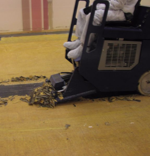
There is also the possibility of altering the slab surface during removal. More aggressive methods of mechanical abatement can open the surface more than intended or create inconsistencies that require additional preparation. What begins as removal can sometimes lead to further surface repair before installation can move forward. Even with these considerations, mechanical abatement is often chosen when the goal is to create a clean and consistent starting point for the next system.
Concrete chemical abatement takes a different approach by using solvents to break down adhesives so they can be collected and removed. This method can help simplify removal and reduce the need for heavy mechanical equipment, especially in spaces where dust or disruption needs to be minimized. It can be particularly useful in renovation environments where maintaining a cleaner work area is important. On the surface, it often appears to be a more controlled process. However, it introduces a different set of considerations that are not always immediately visible.
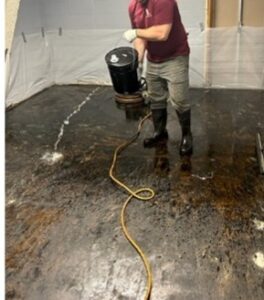
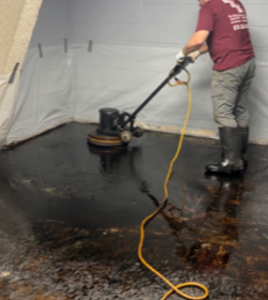
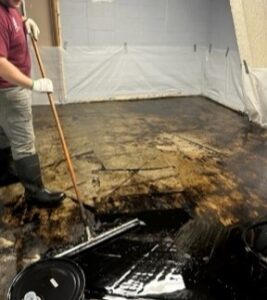

Some of the materials used during removal can be absorbed into the concrete. Over time, residual components may remain in the slab and gradually move back toward the surface. This can influence how new adhesives bond and, in some cases, lead to performance issues that are not immediately obvious. It can also make it more difficult to determine the root cause if problems arise later in the life of the floor. As a result, while chemical abatement can streamline the removal process, it often shifts the focus to how the slab is managed after the work is complete.
What Happens After Adhesive Removal
Removing older materials can expose new variables that need to be considered before moving forward. Older adhesive systems, particularly those used prior to the late 1990s, had a higher tolerance for moisture and pH. As formulations have changed over time, newer systems tend to be more sensitive to those same conditions. This shift has influenced how flooring systems perform, especially in renovation settings.
Older adhesives were solvent-based and less sensitive to water, while newer water-based adhesives require closer attention to slab moisture. Removing the old adhesive can also remove a layer that was not affected by moisture. Without that layer, moisture can move through the slab and interact with the new flooring system. At that point, the project team typically has a few options:
- Proceed with installation and accept some level of uncertainty
- Select materials that are designed to handle higher moisture conditions
- Take a more controlled approach by incorporating a mitigation system
The best choice always comes back to understanding the condition of the slab and how it may affect long-term flooring performance.
Subfloor Moisture Control
Prior to selecting a moisture mitigation approach, the slab should be evaluated using industry-accepted moisture testing methods such as ASTM F1869 and ASTM F2170. Concrete pH should also be measured, as both moisture and alkalinity can influence the long-term performance of flooring systems.
Once testing results have been reviewed, the next step is to determine the most appropriate strategy for the conditions present. Not every slab requires the same solution. Key factors often include moisture levels, surface profile requirements, overall slab condition, and whether contaminants may still be present.
When moisture is a concern, the goal is to create a stable substrate that supports the performance of the flooring system above. This often begins with proper surface preparation to ensure the concrete is clean, sound, and capable of accepting subsequent materials. The level of preparation required will vary depending on the condition of the slab and the performance requirements of the project.
When concrete contamination is part of the equation
In many renovation projects, particularly those involving chemical abatement, moisture may not be the only consideration. Residual solvents or adhesive components can remain in the slab and influence how new flooring systems perform, even when moisture levels appear to be within an acceptable range. Therefore, it is imperative to ensure the surface of the slab is free from anything that can be deemed as a bond breaker.
If a chemical abatement was done, Maxxon has a warranted system that includes a product meant for cleaning the slab surface called Maxxon Commercial Profile. Profile is a spray applied cleaner and concrete profiler designed to help remove contaminants and insoluble salts from the concrete surface while creating a concrete surface profile ranging from CSP 1 to 4. It helps improve surface porosity without the need for shot blasting, and reduces high alkalinity, creating a cleaner and more receptive substrate for primers, moisture mitigation products, and underlayments. Profile is biodegradable and can be cleaned up easily with water.
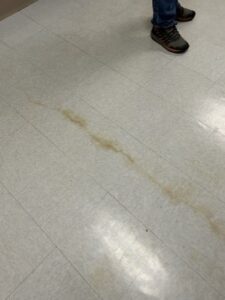

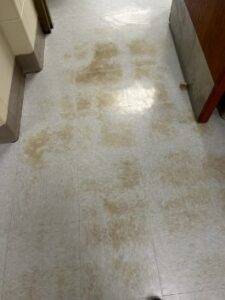
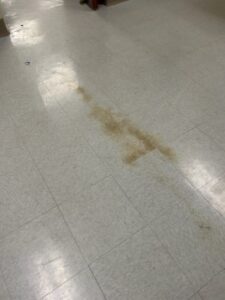
Once the surface is clean, Maxxon Commercial Isolate is designed to lock down contaminants and manage moisture within the slab and limiting its ability to migrate into the flooring system above it. Isolate can help create a more stable surface to accept new flooring finishes. Rather than relying on complete removal, this type of approach focuses on controlling what remains in the concrete and reducing the potential for later issues.
Choosing the right mitigation approach does more than meet a specification. It directly affects long-term flooring performance. Because moisture-related issues and bond failures are common in flooring installations, addressing slab conditions early can help reduce risk and support more consistent results.
Achieving the desired result depends on selecting the right products and working with an experienced partner who understands the conditions of the slab and the demands of the project. Maxxon offers moisture mitigation, surface preparation, and chemically abated slab systems designed to work together as a warranted solution. When installed as part of a qualified Maxxon system, these applications are backed by Maxxon’s Limited Lifetime Warranty, which covers both material and labor, should issues arise. This added level of protection can help reduce uncertainty and provide greater confidence throughout the life of the floor.
Benefits of Concrete Slab Encapsulation
Concrete slab encapsulation is another option that may be considered when full removal is not practical. Instead of removing materials, the goal is to seal them in place, so they are no longer exposed or able to interfere with the new system. This approach can offer advantages in encapsulating products for consideration; penetrating and bridging.
Penetrating encapsulants are designed to move into the material and bind it together. Bridging encapsulants create a layer over the surface, forming a barrier between the required depth for concrete slab encapsulation to be considered.
Gyp-Crete® underlayments are often used to encapsulate well bonded asbestos-containing floors. They create a new, smooth substrate over the existing floor, providing a cost-effective way to reset the surface and prepare it for new finishes. This approach can help reduce demolition costs, minimize disruption, and keep projects moving forward. The primary consideration is the additional floor height created by the encapsulation system, which may require evaluation of transitions, door clearances, and adjacent floor elevations during project planning.
The Bottom Line
Every renovation project brings its own set of conditions, and there is no single approach that works in every situation. Abatement changes the surface. Mitigation builds on that surface. Concrete slab encapsulation works around it. The most reliable outcomes often come from taking the time to understand the slab and selecting an approach that aligns with those conditions. When the process, materials, and expectations are aligned, the result is a system that performs more consistently over time.
For more information on any of the Maxxon Products mentioned, please reach out to your local Maxxon Sales Representative or contact us on Maxxon.com.
Why School Renovations Are High-Stakes Projects
For flooring contractors, school renovations represent a unique category of commercial work, one where the margin for error is extremely small. Unlike many other projects, school construction and renovation timelines are fixed. Classrooms, corridors, gyms, and common areas must be completed before students and staff return, and those deadlines are rarely flexible.
At the same time, many of these buildings are decades old. Beneath the surface, contractors are often dealing with layers of previous flooring systems, aging concrete, and conditions that are difficult to predict until demolition begins. This combination of compressed schedules and unpredictable substrates creates a level of complexity that requires a different approach than standard commercial flooring projects.
The Core Problem: Unknown Conditions in Aging School Buildings
Many delays in school renovation projects are not caused by poor installation, they stem from issues that were not identified early. Aging concrete slabs may contain cracks, or other damage that impact performance. Residual adhesives from previous flooring systems can interfere with bonding. Moisture within the slab, especially in older buildings without proper vapor barriers, can compromise the integrity of new flooring installations.
In some cases, contractors encounter chemically abated surfaces that limit product compatibility or require specialized preparation. In others, substrates are simply uneven from years of use and require significant repair before installation can begin. These challenges rarely exist in isolation. Instead, they compound one another, creating delays that are difficult to recover from within a tight school renovation schedule.
The Solution: Plan Early and Build Around Proven Systems
The most successful flooring contractors approach school renovations with a proactive mindset. Rather than reacting to problems as they arise, they focus on identifying risks early and selecting systems designed specifically for renovation environments.
This begins with evaluating the substrate before the project starts. Understanding the condition of the concrete, the presence of moisture, and the type of existing materials allows contractors to make informed decisions about preparation and installation. It also means choosing solutions that are designed to work together rather than piecing together individual products that may not be fully compatible.
With more than 50 years of experience in underlayments, Maxxon provides integrated systems that address the full range of challenges found in school flooring projects. These systems are backed by a Lifetime of the Floor warranty, giving contractors and building owners greater confidence in long-term performance.
Addressing the Most Common Challenges in School Renovations
One of the most time-consuming aspects of school floor replacement is dealing with existing adhesives. Over the years, many buildings have undergone multiple flooring updates, leaving behind layers of material that must be removed before new flooring can be installed. Traditional removal methods often involve mechanical scraping, which adds time, labor, noise and dust to the jobsite.
Using a solution like Maxxon Commercial Unglued allows contractors to bypass much of that process. By quickly debonding adhesives, it reduces the need for grinding and helps crews move more efficiently into the next phase of work. In large school environments where time is limited, this kind of efficiency can have a meaningful impact on the overall schedule.
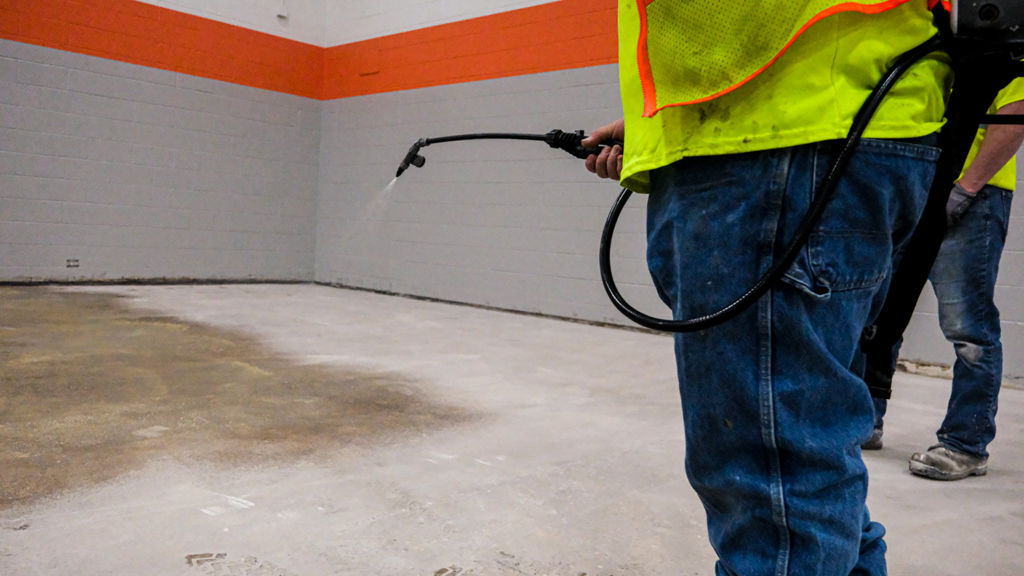
Surface preparation is another area where delays frequently occur. Methods like shotblasting can be effective, but they also require equipment, setup, and cleanup that slows progress. In contrast, products like Maxxon Commercial Profile streamline this step by removing contaminants and achieving the required concrete surface profile in a matter of hours, with minimal dust and disruption. This allows contractors to maintain momentum across multiple areas of a school, rather than being held up in a single phase of the project.
Chemically abated slabs present a different kind of challenge. These surfaces can be difficult to bond to, and as a result, contractors may be hesitant to warranty their work over chemically abated slabs unless a validated system is provided by the floor covering manufacturer, such as Maxxon’s Chemically Abated Slab solution. That approach is not always practical within a tight timeline. Solutions like Maxxon Commercial Isolate provide an alternative by locking down contaminants and creating a stable surface for new flooring. The ability to apply over properly prepared tile in certain situations further reduces the need for demolition, saving both time and cost.
Moisture is one of the most significant risks in any school flooring installation. Older buildings can be especially vulnerable, as the presence, condition, and performance of any existing vapor barrier are often unknown. When moisture is not properly managed, it can lead to adhesive failure, flooring delamination, and long-term performance issues. Systems such as Maxxon Commercial MVP One, Maxxon Commercial MVP Two-Part Epoxy, and Maxxon Commercial Isolate are designed to address this challenge by providing protection up to 100% relative humidity, MVER up to 25 lbs. and a pH of 14. Incorporating these solutions into the project plan helps ensure that the finished floor performs as expected over time.
Severely uneven or damaged subfloors with old sleeper systems are also common in school renovations. Years of use can leave concrete slabs in poor condition, requiring repair and extensive leveling before new flooring can be installed. Using purpose-built floor leveling products like Maxxon Commercial Low Density Fill capped with Maxxon Commercial Pro Level-Right allows contractors to restore flatness efficiently while maintaining control over material usage and budget. This step is critical not only for aesthetics but also for the performance of the finished flooring system.
Finally, the limited installation window that defines most school renovation projects places additional pressure on every phase of the process. Materials that require long cure times or complex installation procedures can quickly become bottlenecks. Fast-setting solutions like Maxxon Commercial Level EZ help address this challenge by allowing foot traffic in 2 – 4 hours and enabling flooring installation in as little as 16 hours. This kind of turnaround is essential when working within the tight constraints of a summer schedule.

Why System-Based Approaches Matter
In complex environments like schools, treating each step of the process as an isolated decision can introduce unnecessary risk and additional time. When products are selected individually without considering how they interact, compatibility issues can arise that affect both performance and installation efficiency.
A system-based approach eliminates much of that uncertainty. By using solutions that are designed to work together, contractors can achieve more predictable results and simplify the overall workflow. This approach also ensures that warranty coverage applies across the entire assembly, rather than being limited to individual components.
With Maxxon, contractors gain access to fully integrated systems tailored to the demands of school renovation projects, providing a level of reliability that is difficult to achieve with a piecemeal approach. Systems like Maxxon’s Chemically Abated Slab Solutions and Moisture Mitigation System provide fast, simplified solutions for flooring contractors, helping position you as the go-to expert on the project.
The Advantage of Involving Experts Early
Another key factor in successful school renovations is bringing in technical expertise early in the process. Too often, challenges are discovered only after work has begun, when options are more limited and timelines are already under pressure.
By involving the Maxxon Commercial Team Experts at the outset, contractors can gain valuable insight into site conditions and potential risks. On-site evaluations, system recommendations, and guidance on installation sequencing all contribute to a more efficient project. This proactive approach helps prevent delays and allows contractors to move forward with greater confidence.
Contact Your Local RepPlanning Ahead Improves Both Schedule and Profitability
Planning ahead is not just about meeting deadlines it also has a direct impact on project profitability. When issues are identified early and addressed with the right systems, contractors can reduce labor overruns, avoid costly delays, and improve overall efficiency.
More predictable material usage, fewer change orders, and smoother coordination between trades all contribute to better outcomes. For contractors managing multiple school renovation projects, these efficiencies can add up quickly, improving both margins and client satisfaction.
Plan Now to Stay Ahead of Your Next School Renovation
School renovations leave little room for error. The contractors who consistently deliver successful projects are those who take the time to understand the conditions they are working with, select systems designed for those conditions, and plan their approach before the work begins.
By focusing on early evaluation, proven solutions, and expert support, you can reduce risk, stay on schedule, and deliver high-quality results across every area of the school.
Get More School Renovation Resources
For additional guidance on school flooring, subfloor preparation, and renovation planning, visit the Maxxon School Renovations Resource Page.
Schedule a Consultation
If you’re preparing for an upcoming project, now is the time to get ahead. Schedule a consultation with Maxxon’s commercial team to evaluate your project conditions and build a plan that keeps your renovation on track from start to finish.
Schedule a ConsultationNEW DEMANDS IN MULTIFAMILY DESIGN
Over the last few decades, reducing noise transfer in multifamily construction has become an important consideration. Driven by code and occupant demands, sound attenuation is now a significant factor in multifamily design and construction. It increases tenant satisfaction and reduces occupant turnover to improve long-term profitability of multifamily properties.
EDUCATION IS THE power THAT PROTECTS YOUR PROJECTS
Recently, composite board and magnesium oxide (MgO) board products have been marketed as an alternate underlayment solution for multifamily properties. As the leader in fire-safety and sound control for multifamily construction, Maxxon is committed to advancing the industry, not only through innovation, but education as well. As you evaluate specification options, it can be helpful to examine how different systems approach fire performance and acoustic control. Comparing these approaches alongside established, proven solutions and asking a few key questions along the way can help ensure the selected assembly aligns with both design intent and real-world performance expectations.
UNDERSTANDING THE SCIENCE OF MULTIFAMILY FIRE SAFETY
The gypsum component of Maxxon Gyp-Crete products is an effective heat sink. Chemically combined water is released from the Gyp-Crete between 200-300°F, absorbing heat from a fire and slowing its spread. For over 50 years, Maxxon® Gyp-Crete® underlayment has been used in multifamily construction as an effective fire-safety solution and is listed in over 140 fire-rated designs. Composite and MgO board products are not listed in as many UL assemblies, which could make it harder to specify and harder for contractors to substitute. This could mean future delays on the project when adding them into your design.
understanding the SCIENCE OF MULTIFAMILY SOUND CONTROL
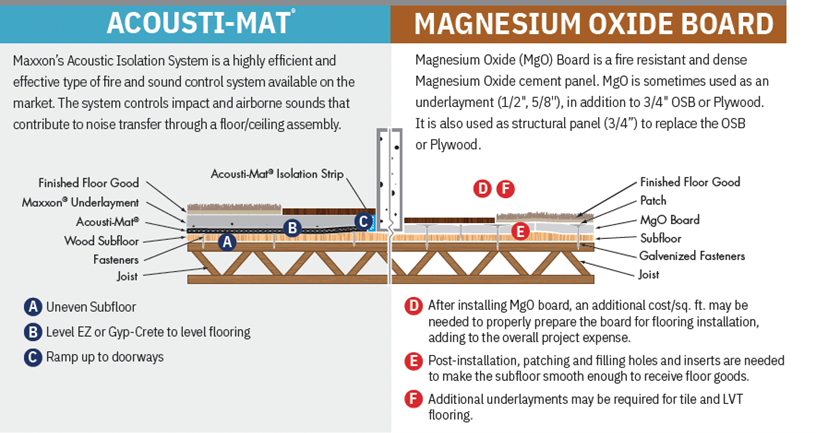
Board-based floor systems are usually installed by fastening the panels directly to the structure. While that approach can seem straightforward, it can also create what acoustical engineers refer to as flanking paths, routes that allow sound and vibration to move through the floor-ceiling assembly. Because the boards are rigidly attached to the framing, structure-borne vibration can transfer more easily from one space to another.
Another factor is mass. Composite board panels typically weigh less than gypsum underlayments, and less mass generally means less ability to block airborne sound. In controlled testing comparing composite board systems to gypsum underlayment assemblies, STC ratings were measured up to seven points lower. As a result, board systems may help reduce some higher-frequency sounds, but they often struggle with lower-frequency impact noise, such as footsteps or dropped objects. Therefore, rigid panel systems may require additional layers or treatments to achieve similar performance of an isolated system.
When we talk about an isolated system, we mean that the floor is completely disconnected from the rest of the structure. The Maxxon Acoustic Isolation System includes Maxxon® Acousti-Mat® to create the “floating” floor, which provides an air gap that helps dissipate impact sound; Maxxon Underlayment to create a solid mass that blocks airborne sound transmission; and Maxxon® Acousti-Mat Perimeter Isolation Strips to block a connection between the “floating” floor system and the building structure. The Maxxon Acoustic Isolation System does not use mechanical fasteners. This eliminates the potential for flanking paths which aid in sound transfer.
Additionally, by offering seven Acousti-Mat products, Maxxon offers many options that exceed code requirements to achieve desired levels of acoustical comfort for designers. Simply put, board products don’t offer much for performance customization.
COMPARING THE OPTIONS
As you review the information above, it may be helpful to take a moment to look at the assemblies themselves. Seeing the systems side by side can make the differences clearer. How the layers are built, how the system connects to the structure, and how each approach is designed to manage fire and sound within the floor assembly. These construction details can play an important role in overall performance. See the comparisons below to view the assemblies side by side.

For additional design tools, like 2D or CAD details, see our product information on the CADetails website here.
SIDE-BY-SIDE, MAXXON DELIVERS ABOVE THE BOARD
When carefully reviewing critical details, it’s clear that Maxxon delivers proven and tested, rated reliability that goes above and beyond board claims. Both during the construction process and throughout occupancy and renovations, the Maxxon Acoustic Isolation System remains the superior fire-safety and sound control solution for multifamily construction.
Building professionals seeking proven solutions can access Maxxon’s Fire & Sound Manual which features an extensive list of sound-tested and UL listed assemblies organized by construction type and Maxxon’s Interactive System Selector to identify which assembly featuring Maxxon’s Acoustic Isolation System is the best fit for ensuring a code-compliant and quieter environment for building occupants. Access the links below to get started, or contact your Maxxon rep
Developed in Europe during the 1990s, mass timber continues to gain momentum across North America. The WoodWorks Innovation Network tracked 2,598 multifamily, commercial, or institutional mass timber projects in progress or built in the United States as of December 20251 — reflecting a skyward trajectory of interest over the past decade.
As projects sprout up across the country, mass timber is poised to transform the built environment with a list of benefits that include sustainability, design flexibility, streamlined construction, safety, and biophilic appeal.
SUSTAINABILITY OF MASS TIMBER
As trees grow, they sequester and store atmospheric carbon. When trees are converted into mass timber products, this carbon is stored in the building2, keeping CO₂ out of the atmosphere for the life of the structure—making mass timber a more sustainable choice than traditional materials. In addition, mass timber helps when applying for green certification programs.
To increase sustainability in commercial and institutional projects, Maxxon Commercial Pro VersaTop offers a low-carbon alternative to concrete flooring. As a cementitious underlayment, VersaTop delivers the same functional thickness of concrete topping at roughly one-quarter to one-third the embodied carbon, based on industry studies. VersaTop’s exposed aggregate look also contributes to mass timber’s biophilic aesthetic.
DESIGN VERSATILITY OF MASS TIMBER
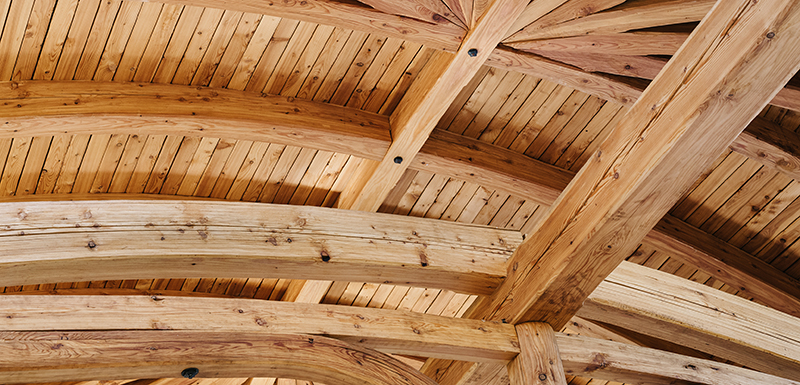
Mass timber can be used in designs that feature long spans, sweeping curves and other architectural signatures that bring drama and a unique identity to a building. By showcasing the natural beauty of exposed wood in expressive, structural aesthetics, architects, developers, and builders are unleashing the design versatility of mass timber to transform the built environment.
STREAMLINED CONSTRUCTION OF MASS TIMBER
Mass timber can be more cost-effective and efficient than alternative forms of construction. The reduced weight of mass timber, compared to steel or concrete, can shorten the time needed for excavation and foundation construction. The prefabricated wood panels and pre-delivery planning sequencing allow mass timber structures to be assembled quickly and by smaller crews, thus streamlining the construction schedule and process.
SAFETY OF MASS TIMBER
Unlike traditional light-frame wood construction, mass timber structures exhibit greater resistance in fires and extreme heat3. Due to their size and the engineered wood process, which limits cracks or air gaps, mass timber develops a protective char layer on the surface while maintaining their structural strength internally, allowing sufficient time for safe evacuation. However, given that the structure itself can become a source of fuel, it is important to leverage design expertise in the planning phase and fire-resistance measures, such as installation of a Gyp-Crete underlayment.

BIOPHILIC APPEAL OF MASS TIMBER
Mass timber supports biophilic design, an approach that reflects the fundamental need to feel connected with nature. Research shows that biophilic design — particularly incorporating natural materials such as wood — can reduce stress, improve cognitive function, boost productivity, and enhance overall well-being of a building’s occupants.
EXPERTISE TO TACKLE THE ACOUSTICS OF MASS TIMBER
Despite its many advantages, mass timber is not without limitations, primarily acoustics. Enter Maxxon Corporation. Backed by more than 50 years of building industry expertise, Maxxon has been supporting mass timber construction for over a decade with proven acoustic isolation systems to meet the unique demands of these projects. Learn more about Maxxon’s mass timber expertise.
“We started testing with mass timber panels early on, so we understand specifically how mass timber panels work and the challenges we face,” says Evelyn Way, Lead Scientist, Acoustics, Maxxon Corporation. The lighter weight of mass timber and its use in beautiful wood ceilings are the main reasons for its acoustical complications. “Typically, you would hang a ceiling to cover the structure, but with mass timber we want to see the structure,” says Way. “Acoustic isolation is all about mass-airspace-mass construction. When you don't have that airspace and mass, then the sound control system needs to be on the top side of the assembly, which comes with a different set of constraints, so it's a lot more challenging.”
ADVANCING MASS TIMBER WITH ACOUSTICAL TESTING
Maxxon focuses on testing to validate our products, in third-party accredited labs, our own accredited lab, and in completed buildings. The Maxxon Acoustics Lab is the world’s largest floor/ceiling acoustical chambers, our world-class floor/ceiling testing facility is accredited by NVLAP (Lab 600320-0) for ASTM E90, E492, and E2179. The lab, designed in collaboration with Jerry Lilly of JGL Acoustics, consists of two stacked 300m3 reverberation chambers sized to reliably capture data down to the 63Hz third-octave band using the VI Acoustics Trident system with GRAS and NI instrumentation. Superior isolation is achieved by separating the pre-cast chambers from each other and the surrounding structure using custom Mason Industries natural rubber isolation pads. Measurements can be performed uninterrupted when even trains pass by and all typical warehouse and construction activities. As an accredited lab, Maxxon adheres to industry testing standards. “We use standard test methods developed by ASTM — for airborne sound transmission it’s E90 and for impact sound transmission it’s E492,” says Way. Without the pressures of a for-profit testing model, Maxxon is also able to expand testing to non-standard methods to gain deeper understanding of the factors that contribute to acoustic isolation.
OBTAINING ACOUSTICAL PRIVACY IN MASS TIMBER
Maxxon’s testing has resulted in a wide variety of acoustic isolation systems for commercial and multifamily mass timber construction, including the three performance levels listed in the ICC G2-2010 Guideline for Acoustics 1for multifamily: code, acceptable, and preferred. Although there are no code requirements for commercial construction, there are expectations of acoustical privacy, and Maxxon has acoustic isolation systems that meet the needs of mass timber commercial applications as well. To determine the right assembly for your project, leverage Maxxon's System Selector.
TAILORED SOLUTIONS FOR MASS TIMBER PROJECTS
“Our main goal is to provide designers, architects, engineers, and contractors with the information and options to achieve the level of acoustic isolation they're looking for,” says Way. “If that's meeting code or providing higher levels of comfort in a building, we want them to understand how to do it.” One of the things Way stresses is sufficient prudence. “With acoustics, it’s always better to build in some conservatism on the design side than to regret your decisions in the field later.”
For over a decade, Maxxon has enhanced the fire safety and acoustical privacy of mass timber buildings across the U.S. with products covering more than 8.5 million square feet. To tap into Maxxon expertise for your next mass timber project, contact your Maxxon representative
Reference:
1International Code Council. ICC G2-2010 Guideline for Acoustics.
https://media.iccsafe.org/store/2015Handbook/ICC_G2-2010.pdf
Leveraging previous specifications in your multifamily designs can be efficient. However, changes to building codes, market demands, and industry standards dictate a fresh look at office masters.
When you consider noisy buildings are a top complaint of multifamily residents, relying on outdated specs can compromise client investment, occupant satisfaction, and possibly your reputation. Did you know that the International Code Council recommends IIC and STC of 55 or higher for market rate apartments and STC and IIC ratings of 60 or higher for luxury properties?
Regularly reviewing and updating your specs ensure your designs comply with new requirements, changing regulations, and increased tenant expectations of acoustical privacy. This approach also allows projects to benefit from industry-leading products and innovative solutions previously absent in your specifications.
Specify with Confidence
Adding Maxxon to your specifications for gypsum underlayments and sound control mats provides proven solutions to meet or exceed building requirements with a trusted leader in multifamily construction. Maxxon’s legacy of innovation and performance embeds confidence in your specifications.
Over 50 years ago, Maxxon revolutionized multifamily construction by inventing Gyp-Crete® gypsum concrete. As an industry pioneer and leader, we then elevated occupant acoustical comfort by introducing Acousti-Mat®, the first sound control mats for multifamily buildings. By specifying Maxxon® Acousti-Mat® 3/8 you can achieve the higher sound control ratings preferred in luxury properties and safeguard code ratings in market rate projects.
Through our commitment to innovation, we continue to develop safe, proprietary solutions to meet or exceed industry standards for compressive strength, fire safety, acoustical isolation, and green building practices. All Maxxon gypsum underlayments and sound control mats are GREENGUARD Gold Certified. And we recently launched our VenTek™ rainscreen systems to keep pace with building codes that target effective moisture management in the building envelope.
Maxxon underlayment products are available in over 140 UL & ULC fire resistance-rated designs. Our acoustical isolation systems are backed by 30+ years of field- and lab-tested performance, including thousands of sound tests. We also offer a state-of-the-art acoustics lab, accredited by NVLAP (Lab 600320-0) for ASTM E90, E492, and E2179, that features the world’s largest floor-ceiling sound chamber. Here our scientists perform precise, accredited testing across a wide range of assemblies in a controlled environment, enabling us to develop tailored solutions for acoustically challenged spaces, including mass timber projects.
Specifying Made Simple
To easily update your specs, simply choose Maxxon products in the leading specification platforms, including MasterSpec (by Deltek), Sweets Product Data Base, and CAD Details for BIM and CAD files. You can also find complete specifications under the Maxxon Design Resources. For your convenience and industry consistency, our products are clearly listed in the following CSI MasterFormat divisions:
| 03 54 00 | Gypsum Underlayments |
| 03 54 00 Accessories Section | Sound Control Mats |
| 07 25 00 | Weather Barriers/Building Envelope (Rainscreen Systems) |
Transforming Your Specs Into Reality
Maxxon products are made in the United States and readily available in every market across the country. Your projects won’t be delayed by out-of-stock issues or supply chain disruptions. We maintain stringent quality control standards in manufacturing and provide quality assurance with our full-system warranty. Our nationwide network of authorized applicators provides efficient and expert product installation to ensure your project is done right, the first time. When you specify Maxxon for your multifamily designs, our long-standing expertise brings your specifications to life exactly as you imagined.
Your Partner In Spec Success
When you specify Maxxon for your multifamily designs, you get more than proven, reliable products. You also get a full-service partner, committed to supporting project success every step of the way. Our expertise and responsiveness provide guidance during the planning and design phase and throughout the project lifecycle. From fast, accurate answers on specifications to jobsite visits and installation expertise, Maxxon delivers answers, accountability, and the ultimate in performance from our products and our people.
Whether you’re updating your existing multifamily specs or designing a new development, Maxxon makes it simple to specify every project with confidence.
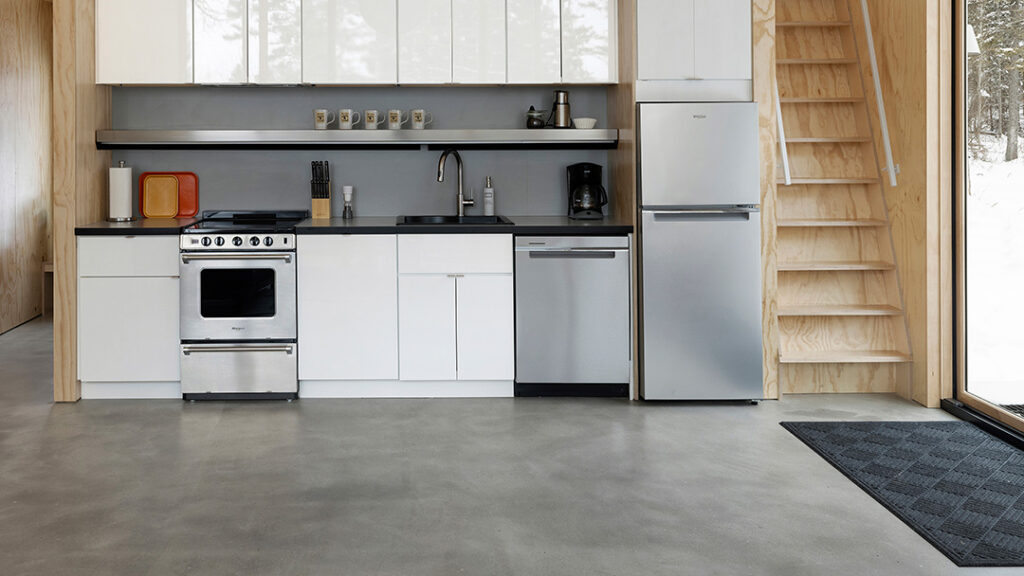
Find a RepOver the last three decades, concrete flooring has transitioned beyond just a durable solution for commercial buildings. Today, this popular, exposed-aggregate aesthetic is the design choice for properties seeking a modern, organic architectural design. The look is found everywhere including commercial buildings, retail spaces, multifamily properties and luxury residences.
Limitations of Decorative Concrete Applications.
For both new construction and renovation projects, creating a decorative concrete look can present significant challenges. Structural load limitations may restrict traditional decorative toppings in wood frame construction due to the heavy equipment needed for grinding and polishing, while accelerated project schedules often leave little room for the many passes required for this aesthetic. In addition, the installation relies on heavy, specialized equipment and highly trained labor, resulting in a system that is often well out of budget.
An Easier Way to Achieve the Look.
To overcome these obstacles, while still delivering the look of exposed concrete, Maxxon developed Maxxon® Commercial VersaTop EZ™. This innovative, hydraulic cement floor topping produces an aesthetic similar to decorative concrete without the high cost, the need for several passes of polishing and extended timelines.
Less Grinding. Greater Flexibility.
Maxxon® Commercial VersaTop EZ™ is uniquely formulated to hold aggregate at the surface to reduce grinding requirements. Unlike some products, grinding effort does not intensify over time. The surface can be ground as early as the next day or weeks later with no change in difficulty, allowing for greater flexibility in the project schedule.
Lighter on labor.
In renovation and commercial projects, labor is often one of the largest cost drivers. Maxxon Commercial VersaTop EZ™ helps reduce overall project cost by simplifying the finishing process with wear surfaces. This allows crews to achieve the desired finish with less effort and fewer labor hours.
Its formulation is designed to grind more easily than traditional toppings, enabling faster finishing with smaller equipment and reduced labor intensity.
A Smarter Specification.
By specifying Maxxon® Commercial VersaTop EZ™, architects can achieve the look of concrete floors with less labor and fewer scheduling complexities. VersaTop EZ™ is also compatible with sound attenuation systems and is fire rated, helping support both performance and code requirements. VersaTop EZ™ is compatible with a broad range of sealer chemistries allowing architects to choose their ideal finish aesthetic.
The Flooring Contractor’s Advantage.
Maxxon® Commercial VersaTop EZ™ enables flooring contractors to capitalize on the increased demand for the look of concrete flooring. VersaTop EZ™ can be barrel or hippo mixed. Its flow makes it easy to achieve a smooth surface ready for grinding as early as the next day. Both floor grinding machines or swing buffers can be used for the two-pass grinding step.
Now Available Through Distribution.
Maxxon® Commercial VersaTop EZ™ is now available through distribution. To increase your competitive advantage and expand your flooring portfolio with the look customers desire, reach out to your distributor today or talk with your Maxxon rep.
Large or deep-fill projects—especially those 10,000 square feet and larger or requiring 2” or more of height correction—often tempt contractors to rely on traditional presanded methods or improvised fill systems to control costs. But these approaches can quickly drive expenses higher than expected. Presanded self-leveling underlayments are costly by volume, extremely heavy to transport, and notoriously slow to mix and place across large footprints. To offset the weight and material cost, many crews turn to pea gravel or foam board as fill layers, hoping to stretch coverage and keep loads within structural limits. Unfortunately, these “cost-saving” methods often introduce new risks: inconsistent performance, increased labor, extended timelines, bonding challenges, and a much higher potential for callbacks. In reality, the hidden costs of presanded systems—and the workarounds they force—can significantly inflate project budgets while compromising long-term flooring performance.
In this blog, we explore traditional methods used for large and deep fill projects and share innovative solutions to save time and money without compromising long-term flooring performance or the structural integrity of buildings.
Pea Gravel Method
Pea gravel (typically 3/8”) is often used in deep fills to raise the surface before the initial underlayment pour. Then an underlayment is mixed into the pea gravel, ensuring the underlayment is fully incorporated and bonds to the substrate beneath it. To accommodate the finished flooring, the mixture application should provide a ½-inch or 3/8-inch allowance from finished height. The next day, the filled surface can be primed.
Drawbacks of Pea Gravel:
- May exceed dead-load restrictions and hinder structural strength
- Settling can compromise the underlayment bond to substrate and create hollow spots or cracking
- Washed pea gravel can add more moisture to leveling mix which can impact compressive strength
- Incompatible pea gravel, such as shale stone, can impede underlayment bond with substrate
- Non-bagged, non-washed pea gravel introduces the risk of bond-breaking contaminants
- Labor-intensive
Foam Board Method
Another traditional method for large and deep fills uses expanded (EPS) or extruded (EXP) polystyrene, commonly known as foam board. EPS board must meet ASTM C-578-85 for Type IV or Type IX with a 25 lb. minimum density. When using foam board, the underlayment must be poured a minimum of 1-inch thick over the top of the EPS board. At thicknesses of 1-inch to less than 1½-inch, the EPS board must have holes drilled in all directions — 1-inch minimum diameter holes (12-inch on center maximum) — to support the pedestals. The EPS board must be securely fastened to the subfloor either with adhesive or an underlayment slurry. Once the EPS board is installed, it can be primed and capped with a Maxxon underlayment, typically the next day.
Drawbacks of EPS Foam Board
- Rigid foam board does not contour with substrate undulations
- Large voids create hollow spots that impact contact with substrate
- Adhesives/slurry mixes may not resolve large gaps between board and substrate, resulting in poor adhesion
- Improper adhesion can lead to underlayment cracking and delamination
- Drilling holes is messy and time-consuming
- Foam board prices continue to increase
Using Presanded Products
Presanded self-leveling underlayments arrive with the sand already blended into the bag, so installers mix each batch onsite using small mixers, barrels, or handheld tools. Water is added, the material is blended to a workable consistency, and crews carry or pour each batch into place. While this method can work on smaller areas, it becomes highly inefficient and risky on large projects that exceed 10,000 square feet.
Drawbacks of Presanded Products:
- Slow production rates: Barrel mixing and hand-pouring cannot keep pace with the volume required for large footprints.
- High labor burden: Big crews are needed to keep up with repetitive mixing, carrying buckets, and placing material.
- Batch-to-batch inconsistency: Thousands of individual mixes increase the risk of uneven water ratios, strength variability, and surface differences.
- Quality control challenges: Without pump-applied consistency, flatness and finish can vary significantly across large spaces.
- Schedule delays: The manual process becomes a bottleneck, often extending timelines compared to pump-applied systems.
- Logistical overload: Managing pallets, water, small tools, and continuous onsite mixing across a large area becomes difficult to coordinate.
- Increased physical strain: Moving heavy buckets across wide floor plates creates fatigue, higher error rates, and potential safety risks.
The Sleeper Dilemma
Another big drawback of traditional methods for large and deep fills is when a sleeper system is present, or the demo process reveals one. Bringing a sleeper system to height can be labor intensive and add extra time and expense when traditional methods are used. Bringing the subfloor to the necessary height can require 3 or more inches of material along with extended installation and curing — all factors that can derail the project timeline and initial estimate.
The Large and Deep Fill Landscape
Many scenarios drive the need for a large and deep fill solution. Renovating old buildings. Converting offices to residential units. Repurposing parking structures into hotel rooms. Even updating gymnasiums with old sleeper systems.
Whether completely adapting a structure’s use, bringing settled buildings up to level, or addressing concrete shrinking and bird baths, Maxxon’s solution for large and deep fills rise above traditional methods — allowing flooring professionals to meet market demands for time and money to seize more project opportunities.
Changing the Game: Maxxon Innovation & Expertise
Maxxon’s solution for large and deep fills combine innovation with five-plus decades of floor prep expertise to simplify the installation process and accelerate project timelines. Regardless of project requirements and conditions, Maxxon equips you to rise to change the game.
Maxxon Commercial Low Density Fill™ (LDF)
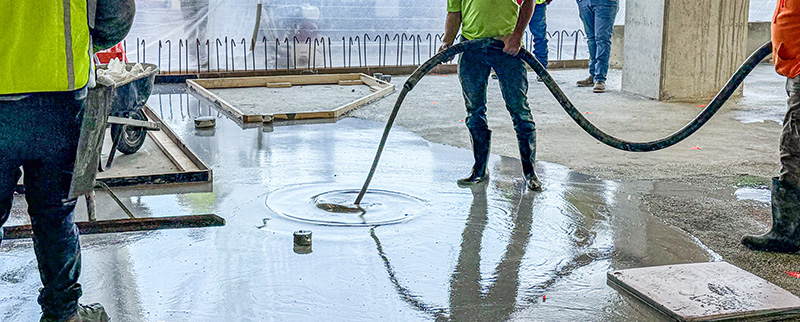
For deep-fill applications, especially where weight is a concern, Low Density Fill™ outperforms traditional methods with speed and ease.
- 80% lighter than concrete with a weight of 28 to 32 lbs. pcf
- No thickness limitation, starting from 3/8-inch
- Easy to place and transition
- Can be pumped or poured over electrical conduit and plumbing
- Fast drying, typically overnight
- Cap with 3/4-inch Maxxon underlayment
Maxxon Commercial Pro Level-Right®
For capping Low Density Fill™ or providing a high-strength lift to commercial spaces, applicator-applied, Level-Right® is the right, cost-effective choice.
- Compressive strengths from 5,000 – 7,000 psi
- Can be applied from featheredge to 3-inch
- Self-leveling to ¼-inch with great flow properties
- Fast install up to 25,000 sf/day by Maxxon-approved applicators
- No special subfloor prep required
- GreenGuard Gold Certified and UL Fire Rated
Maxxon Commercial Pro Level-Crete™
For capping Low Density Fill™ or lifting and leveling commercial spaces, applicator-applied, Level-Crete® is a resurfacing powerhouse at an affordable price.
- Compressive strengths from 4,000 – 5,000 psi
- Great flow properties, can be applied from featheredge to 3-inch
- Meets ASTM F710 standards for preparing concrete to receive resilient flooring
- Eliminates shotblasting to minimize prep
- GreenGuard Gold Certified and UL Fire Rated
Call Before You Fill
For large and deep fill applications, Maxxon’s proven floor preparation products and systems eliminate guesswork, reduce installation time, and ensure consistent performance across every project. With our proven solutions, you’ll complete jobs faster, avoid costly rework, and maintain the reputation that drives your business forward.
If you need help finding our product, or before you estimate your next large and deep fill project, reach out to a Maxxon rep. We’ll provide expert guidance on the best solution to save you time and money while delivering great results. Talk with your Maxxon rep today.
The tenant is lined up. The schedule is tight, but doable. Before move-in, the worn-out floor needs replacing, and that’s where you come in.
For multifamily renovations, keeping unit-by-unit turns on track and on budget is essential for your profitability and long-term customer satisfaction.
So, what happens when you remove the finished flooring and come face-to-face with a subpar subfloor? Whether it’s dusty gypsum, areas that need patching, or a full-room that requires leveling, Maxxon® equips you to save the day, and the project timeline. It also allows you to be a single-source provider for your customers.
With Maxxon’s Powders & Patch Repair System, you can skip a full tear out and fix subfloors fast. Designed to work together, our fire-resistant rated solutions deliver a reliable, warranted system for reconsolidating, prepping damage, and smoothing out uneven subfloors before installing finished flooring. We also offer a low-profile sound mat to help mitigate sound and reduce noise complaints from tenants.
No matter what conditions are lurking under the old, finished flooring, Maxxon empowers you to get the job done right with the speed, cost-efficiency, and high performance your projects demand.
Your Go-To for Subfloor Rehab: Maxxon’s Powders & Patch Repair System
Before you head into your next multifamily flooring renovation, discover how the Maxxon Powders & Patch Repair System supports your success. And remember, the Maxxon team of experts is always available to answer your questions or join you on the jobsite for a personalized walk through..
The Revolutionary Re-Consolidator
Maxxon Commercial Fortify Primer™ — This innovative, single-component primer strengthens old, soft or dusty gypsum underlayments to save you the time and money of replacement. Ready-to-use straight from the pail with a standard pump sprayer, it creates a solid surface that bonds well to patch and levelers.
The Fast-Drying, Fire-Resistant Patch
Maxxon Commercial Gyp-Fix EZ™ — Repair imperfections in interior gypsum with this non-shrinking, UL fire-resistance rated patch and skim coat that provides a minimum compressive strength of 4,000 psi. This trowelable, easy-to-place patch can be featheredged and is ready for floor coverings in as little as 40 minutes.
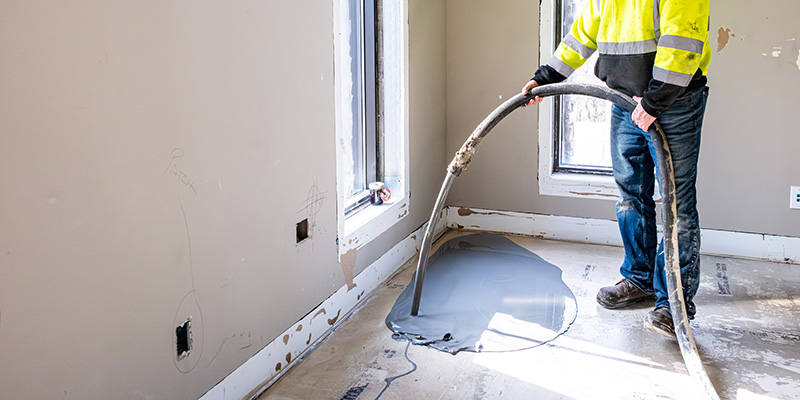
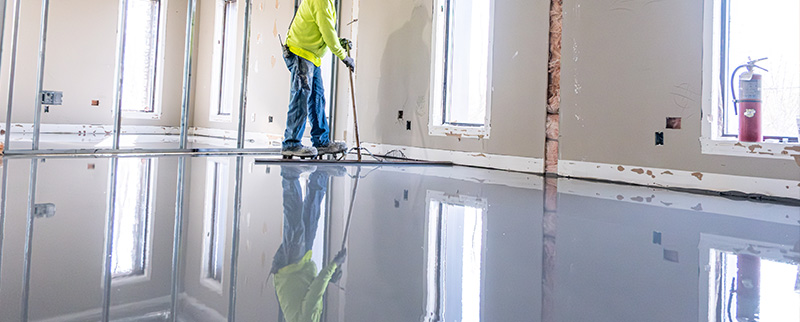
Find Your Flow With Our Time-Saving Self-Leveler
Maxxon Commercial Level EZ™ — Resurface gypsum subfloors with this easy-to-use, flowable, hydraulic-cement underlayment that’s self-leveling at 1/4" and can be installed from featheredge to 2". No shot blasting required — simply clean, prime, and pour to achieve a durable, flat, fire-resistant surface that’s ready for floor coverings the next day.
Deep Fills and Thin Pours Made EZ
Maxxon Commercial EZ Crete™ — Easily tackle deeper fills and thinner pours with this low-prep, economical underlayment. For subfloor repairing and resurfacing, it installs from ⅜” to 3” and delivers a smooth, durable, fire-resistant surface with a minimum compressive strength of 4,000 psi. Cure times vary based on installation depth.

Add Sound Control Without Height
Maxxon Acousti-Top® — Provide code-compliant sound control to multifamily renovations with this low-profile, low-bulk sound mat that won’t impact floor height. Less than 1/16” thick, this sound mat is fast and easy to install, and is suitable for fully adhered floors, floating floors, and radiant flooring.
Your Problem-Solving Partner for Multifamily Renovations
As the pioneer in underlayment and sound control technologies for multifamily projects, Maxxon leads the way in subfloor repair and renovation with our Powders & Patch System featuring made-in-USA products. To learn more, contact a Maxxon expert today.
Left untreated, moisture in concrete slabs can ruin finished flooring and your reputation as a trusted, flooring professional.
Moisture: A Wicked Problem
Slab moisture is known to cause adhesive debonding, warping, delamination, and other issues that lead to full-blown flooring failures. Worst of all, moisture is a stealth enemy. Since moisture levels can change over time, there’s no telling when it might rise up and wreck your work. It could be weeks, months, even years after jobs are completed — leaving you on the hook for costly do-overs and dealing with dissatisfied customers.
The Time-Consuming Traps of Mitigation
Unfortunately, traditional moisture mitigation methods can be time-consuming, requiring extensive slab prep and excessive curing times. With these added hassles, mitigating moisture as a preventive, proactive step didn’t make sense unless absolutely necessary. Thankfully, Maxxon has revolutionized the moisture mitigation process with Maxxon Commercial MVP One.
Moisture Mitigation Done in One Day
Now you have the power to mitigate moisture in one day. Maxxon® Commercial MVP One is a proven, moisture vapor barrier and primer that dries fully overnight. No extended curing. No guesswork on protection. Simply roll it on — there’s no profiling needed for clean, porous slabs. The next morning, you’re ready to patch or level with Maxxon® Commercial Skim Fill™ or Maxxon® Commercial Level EZ™.
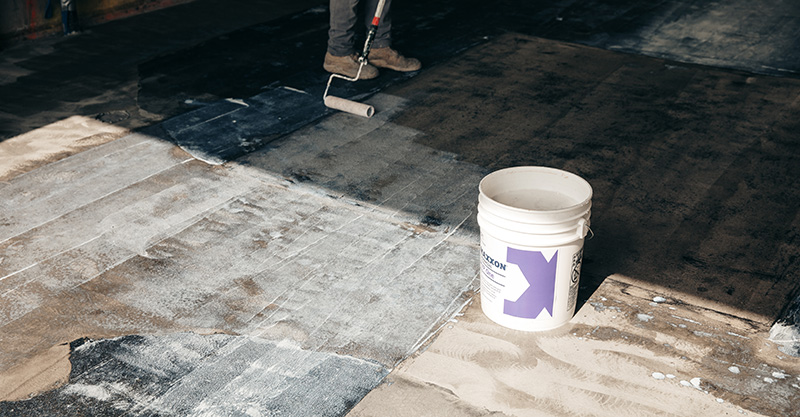
Moisture Mitigation Done Right
The superior chemistry of Maxxon Commercial MVP One combines the effectiveness of a two-part based epoxy in an easy-to-use, single-component, water-based solution. It’s more than one and done, it’s one and done right. This ready-to-use formula is specified for use over concrete slabs up to 100% RH, 25 MVER, and 14 pH, delivering less than 0.1 perm rating to match the requirements of ASTM F3010 and ASTM E96. With over 5 million square feet installed and counting, Maxxon Commercial MVP One is the moisture mitigation solution of choice for healthcare, education, retail, hospitality, and industrial projects.
Prevention and Protection That Won’t Slow You Down
Maxxon Commercial MVP One is the fast, easy way to prevent moisture-related failures before they start. This proven, powerful, one-day moisture mitigation solution allows you to block moisture vapor emissions without slowing down. Apply it one day and return to service the next, confidently knowing your work and your reputation are protected.
Avoid callbacks and schedule delays with Maxxon Commercial MVP One — it’s the time-saving, moisture-mitigation powerhouse trusted by the pros.
Have a question or want to discuss a moisture-related issue? Contact a Maxxon expert for support.