Update: The Rise of Mass Timber in Sustainable Construction
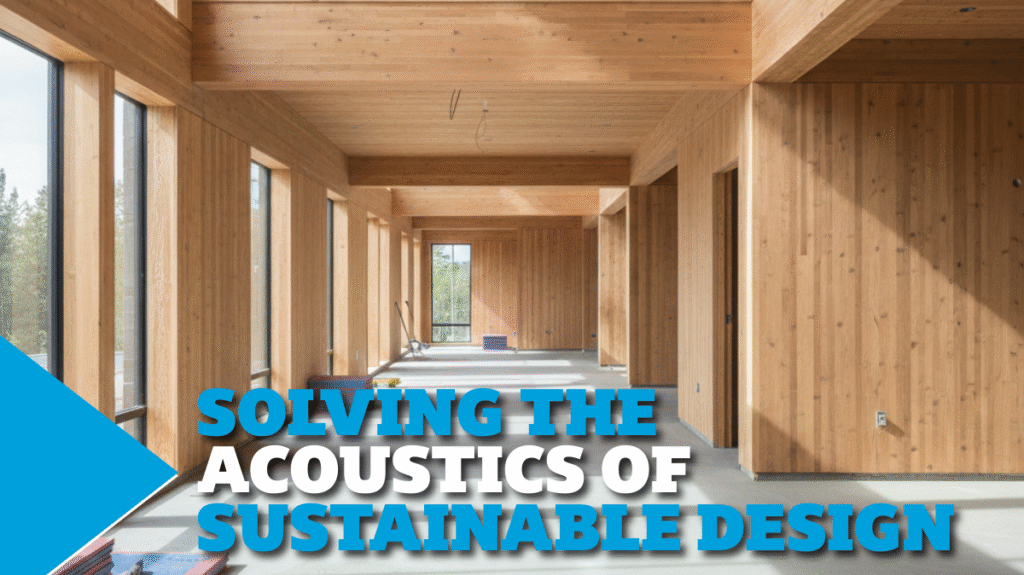
Developed in Europe during the 1990s, mass timber continues to gain momentum across North America. The WoodWorks Innovation Network tracked 2,598 multifamily, commercial, or institutional mass timber projects in progress or built in the United States as of December 20251 — reflecting a skyward trajectory of interest over the past decade.
As projects sprout up across the country, mass timber is poised to transform the built environment with a list of benefits that include sustainability, design flexibility, streamlined construction, safety, and biophilic appeal.
SUSTAINABILITY OF MASS TIMBER
As trees grow, they sequester and store atmospheric carbon. When trees are converted into mass timber products, this carbon is stored in the building2, keeping CO₂ out of the atmosphere for the life of the structure—making mass timber a more sustainable choice than traditional materials. In addition, mass timber helps when applying for green certification programs.
To increase sustainability in commercial and institutional projects, Maxxon Commercial Pro VersaTop offers a low-carbon alternative to concrete flooring. As a cementitious underlayment, VersaTop delivers the same functional thickness of concrete topping at roughly one-quarter to one-third the embodied carbon, based on industry studies. VersaTop’s exposed aggregate look also contributes to mass timber’s biophilic aesthetic.
DESIGN VERSATILITY OF MASS TIMBER
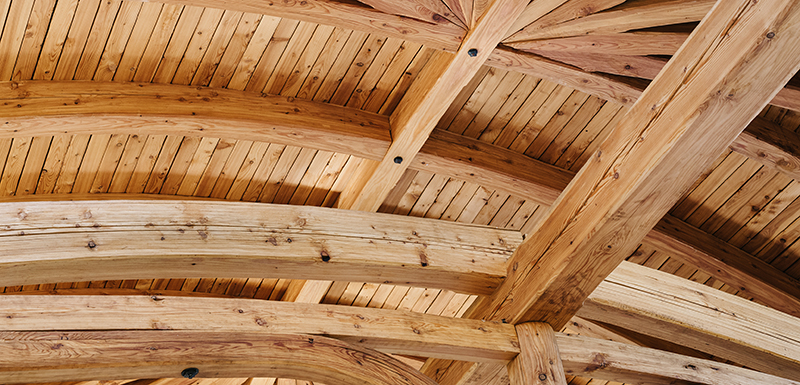
Mass timber can be used in designs that feature long spans, sweeping curves and other architectural signatures that bring drama and a unique identity to a building. By showcasing the natural beauty of exposed wood in expressive, structural aesthetics, architects, developers, and builders are unleashing the design versatility of mass timber to transform the built environment.
STREAMLINED CONSTRUCTION OF MASS TIMBER
Mass timber can be more cost-effective and efficient than alternative forms of construction. The reduced weight of mass timber, compared to steel or concrete, can shorten the time needed for excavation and foundation construction. The prefabricated wood panels and pre-delivery planning sequencing allow mass timber structures to be assembled quickly and by smaller crews, thus streamlining the construction schedule and process.
SAFETY OF MASS TIMBER
Unlike traditional light-frame wood construction, mass timber structures exhibit greater resistance in fires and extreme heat3. Due to their size and the engineered wood process, which limits cracks or air gaps, mass timber develops a protective char layer on the surface while maintaining their structural strength internally, allowing sufficient time for safe evacuation. However, given that the structure itself can become a source of fuel, it is important to leverage design expertise in the planning phase and fire-resistance measures, such as installation of a Gyp-Crete underlayment.

BIOPHILIC APPEAL OF MASS TIMBER
Mass timber supports biophilic design, an approach that reflects the fundamental need to feel connected with nature. Research shows that biophilic design — particularly incorporating natural materials such as wood — can reduce stress, improve cognitive function, boost productivity, and enhance overall well-being of a building’s occupants.
EXPERTISE TO TACKLE THE ACOUSTICS OF MASS TIMBER
Despite its many advantages, mass timber is not without limitations, primarily acoustics. Enter Maxxon Corporation. Backed by more than 50 years of building industry expertise, Maxxon has been supporting mass timber construction for over a decade with proven acoustic isolation systems to meet the unique demands of these projects. Learn more about Maxxon’s mass timber expertise.
“We started testing with mass timber panels early on, so we understand specifically how mass timber panels work and the challenges we face,” says Evelyn Way, Lead Scientist, Acoustics, Maxxon Corporation. The lighter weight of mass timber and its use in beautiful wood ceilings are the main reasons for its acoustical complications. “Typically, you would hang a ceiling to cover the structure, but with mass timber we want to see the structure,” says Way. “Acoustic isolation is all about mass-airspace-mass construction. When you don't have that airspace and mass, then the sound control system needs to be on the top side of the assembly, which comes with a different set of constraints, so it's a lot more challenging.”
ADVANCING MASS TIMBER WITH ACOUSTICAL TESTING
Maxxon focuses on testing to validate our products, in third-party accredited labs, our own accredited lab, and in completed buildings. The Maxxon Acoustics Lab is the world’s largest floor/ceiling acoustical chambers, our world-class floor/ceiling testing facility is accredited by NVLAP (Lab 600320-0) for ASTM E90, E492, and E2179. The lab, designed in collaboration with Jerry Lilly of JGL Acoustics, consists of two stacked 300m3 reverberation chambers sized to reliably capture data down to the 63Hz third-octave band using the VI Acoustics Trident system with GRAS and NI instrumentation. Superior isolation is achieved by separating the pre-cast chambers from each other and the surrounding structure using custom Mason Industries natural rubber isolation pads. Measurements can be performed uninterrupted when even trains pass by and all typical warehouse and construction activities. As an accredited lab, Maxxon adheres to industry testing standards. “We use standard test methods developed by ASTM — for airborne sound transmission it’s E90 and for impact sound transmission it’s E492,” says Way. Without the pressures of a for-profit testing model, Maxxon is also able to expand testing to non-standard methods to gain deeper understanding of the factors that contribute to acoustic isolation.
OBTAINING ACOUSTICAL PRIVACY IN MASS TIMBER
Maxxon’s testing has resulted in a wide variety of acoustic isolation systems for commercial and multifamily mass timber construction, including the three performance levels listed in the ICC G2-2010 Guideline for Acoustics 1for multifamily: code, acceptable, and preferred. Although there are no code requirements for commercial construction, there are expectations of acoustical privacy, and Maxxon has acoustic isolation systems that meet the needs of mass timber commercial applications as well. To determine the right assembly for your project, leverage Maxxon's System Selector.
TAILORED SOLUTIONS FOR MASS TIMBER PROJECTS
“Our main goal is to provide designers, architects, engineers, and contractors with the information and options to achieve the level of acoustic isolation they're looking for,” says Way. “If that's meeting code or providing higher levels of comfort in a building, we want them to understand how to do it.” One of the things Way stresses is sufficient prudence. “With acoustics, it’s always better to build in some conservatism on the design side than to regret your decisions in the field later.”
For over a decade, Maxxon has enhanced the fire safety and acoustical privacy of mass timber buildings across the U.S. with products covering more than 8.5 million square feet. To tap into Maxxon expertise for your next mass timber project, contact your Maxxon representative
Reference:
1International Code Council. ICC G2-2010 Guideline for Acoustics.
https://media.iccsafe.org/store/2015Handbook/ICC_G2-2010.pdf